Throughout Thai history, the Ayutthaya Kingdom period from the late 16th to early 17th centuries is forever etched with a blazing hero: King Naresuan, who led Siam (ancient Thailand) to liberate itself from Burmese oppression and regain its independence. Revered as a “national hero” by the Thai people, Naresuan possessed the extraordinary courage of George Washington, leading his nation to freedom, and the guerrilla warfare acumen of Francis “Swamp Fox” Marion. The “Wild Tiger Regiment,” the group he personally founded, was like a sharp dagger, piercing the shadow of Burmese occupation and becoming the most dazzling banner on Siam’s path to national restoration. For four centuries, their story has been passed down through generations of Thais like a masterpiece, immortalized in temple murals and on the silver screen.
Rising from Troubled Times: Naresuan and Siam’s Struggle for Independence
In 16th-century Southeast Asia, the flames of war raged. In 1567, the Burmese invasion of Ayutthaya ravaged Siam, forcing the kingdom to temporarily become a Burmese vassal. It was in this war-torn wilderness that the young Naresuan first experienced the pain of a shattered nation. Though a mere prince of the Sukhothai Kingdom at the time, his deep love for his country sealed his heroic destiny.
In 1583, Naresuan raised the banner of independence, determined to lead the Siamese people to freedom. This was not just a battle to reclaim territory, but a decisive battle to defend their dignity. Facing such a formidable foe, the Burmese army was well-equipped and powerful. A head-on confrontation proved almost impossible. Naresuan knew that only flexible guerrilla tactics could break the enemy’s advantage.
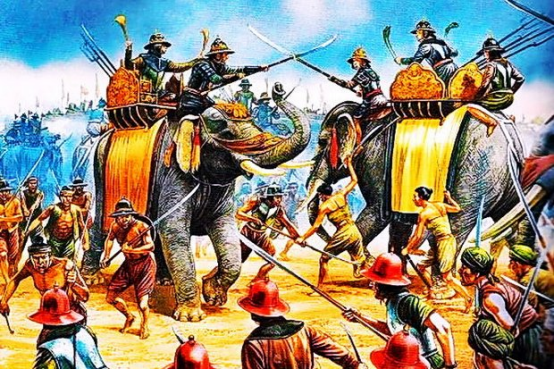
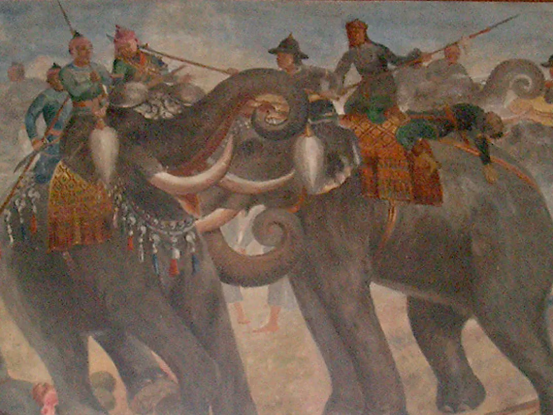
Naresuan’s military prowess was fully demonstrated during the War of Resistance. One of the most legendary battles was the “elephant-back duel” between him and his childhood rival, the Burmese prince Mingyi Swa. In a pivotal battle, the two men faced off on their respective war elephants, a scene of epic proportions. Naresuan’s exceptional skill and courage ultimately defeated his opponent, a victory that not only changed the course of the war but also etched itself deeply into Thai national memory: even the most formidable enemy could not yield to their will.
After defeating the Burmese defenders, Naresuan did not stop there. He immediately launched a counterattack, deep into Burma, and completely destroyed Burma’s Mon allies in Cambodia, completely shattering Burma’s ambition to dominate Southeast Asia. This series of actions marked the complete independence of Siam, and Naresuan also jumped from the King of Sukhothai to the monarch of the entire Ayutthaya Kingdom, becoming a “liberator” respected by later generations.
Wild Tiger Roaring in the Forest: The Birth and Legend of a Guerrilla Unit
Naresuan’s victory was inseparable from the support of a special unit—the “Wild Tiger Regiment.” This unit was born out of Naresuan’s deep understanding that facing the powerful Burmese army, regular troops alone could not withstand the enemy’s numerous defenses. Therefore, he assembled a nimble, brave, and expert jungle warfare unit, capable of lurking, raiding, and disrupting the enemy’s positions like wild tigers.
The “Wild Tigers” were composed almost entirely of Siamese men who had lost their homes and loved ones after the Burmese invasion of 1563. Most had suffered for their country, and their resolve to restore their homeland was unwavering. Furthermore, Siam had a long-standing reputation for martial prowess, and many young Siamese men had trained in Muay Thai and swordsmanship from a young age. Some even received training in Bangkok’s renowned Phudaisawan swordsmanship, demonstrating their agility and exceptional skill. Naresuan set extremely high standards for this unit, requiring every member to be an expert in Muay Thai, weapons, and jungle warfare, and these soldiers demonstrated their abilities through action.
The Wild Tigers’ guerrilla tactics were deployed to full effect. Unlike direct confrontations with the Burmese regular army, they were more like “ghosts” in the jungle, lurking silently and accurately monitoring the enemy’s movements. When the Burmese army relaxed its vigilance, they launched swift surprise attacks, utilizing Muay Thai close-quarters combat techniques and a variety of weaponry to instantly eliminate a portion of the enemy force before swiftly retreating. Murals at Wat Suwandararam in Ayutthaya still depict these guerrillas’ nimble movements through the jungle. Without the Wild Tigers’ precise intelligence and guerrilla tactics, Siam would have faced far greater difficulties in completely repelling the Burmese.
A Century of Echoes: The “Rebirth” and Spiritual Heritage of the Wild Tigers
While the story of Naresuan and the Tigers didn’t completely fade with the war’s end, their legacy endured. In 1911, King Vajiravudh (Rama VI) ascended the throne of Thailand. To promote national spirit and strengthen national cohesion, he decided to “resurrect” the Tigers in name only. While this “new Tigers” was a stark departure from the 16th-century guerrillas—a paramilitary force primarily responsible for providing military training to civil servants and serving as the king’s ceremonial guard—their spirit remained deeply rooted.
King Rama VI invested considerable energy in developing this unit, personally participating in its training and engaging in discussions and morale-boosting activities. This new unit gradually assumed greater responsibilities, serving as the King’s bodyguard, embodying a strong sense of nationalism. In wartime, it also served as a police force and army reserve, carrying on the tradition of scouting enemy positions.
However, in 1912, following a failed palace uprising by officers, King Rama VI disbanded the new Wild Tigers for safety reasons. Nevertheless, the Wild Tigers’ spirit lived on, and its influence continues to this day: the newly formed “Tiger Cubs” became the foundation of the Thai Scouts, which continue to carry on the spirit of bravery and loyalty.
Four Hundred Years of Commemoration: The Enduring Charm of Heroic Legends
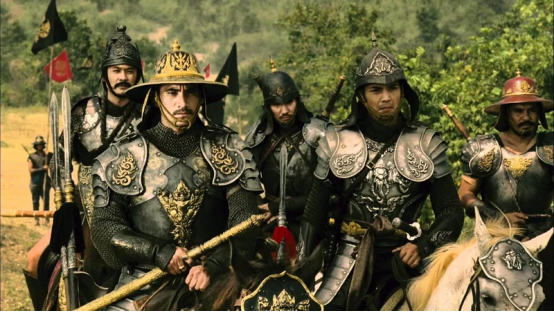
For four centuries, the story of King Naresuan and the Tigers has been deeply ingrained in the Thai nation. In the hearts of Thais, Naresuan embodies justice and freedom, while the Tigers symbolize courage and wisdom. Their deeds have been chronicled in history textbooks, depicted in temple murals, and passed down through the streets. In recent years, the film series “King Naresuan” has also made them widely known beyond Thailand.
Why has this story endured for four centuries? Perhaps it embodies the deepest aspirations of the Thai people: to never yield in the face of oppression, to sacrifice for their homeland. Naresuan’s leadership and the fighting spirit of the Wild Tigers remain not only a historical memory but also a source of inspiration for every generation of Thais facing challenges. It reminds every Thai that a nation’s independence and dignity must be defended with courage and wisdom, and that the spirit of heroes will never be extinguished by time.
Today, when you visit the ruins of Ayutthaya in Thailand, or pause to admire the ancient war murals at Wat Suwandaram, you can still hear the roar of the wild tigers and see the heroic figure of King Naresuan astride his war elephant. It is a heroic epic that belongs to Thailand and an eternal chapter in humanity’s “struggle for freedom.”