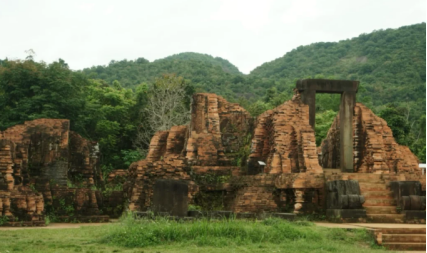
Cham, this unfamiliar term, is the name of an ancient kingdom in central Vietnam. Its history can be traced back to the 2nd century AD and lasted until the 19th century. For more than a thousand years, the Cham Kingdom occupied an important position in Southeast Asia with its unique Hindu culture and prosperous maritime trade. However, with the rise and expansion of surrounding regimes, especially the continuous encroachment of the Nguyen Dynasty of Vietnam, the territory of the Cham Kingdom was gradually annexed and eventually disappeared in the long river of history. The Cham people, who once ruled one side, have now become one of the 54 ethnic minorities in Vietnam. Their language, culture and lifestyle continue to be inherited and evolved in modern society.
Origins of the Champa Kingdom
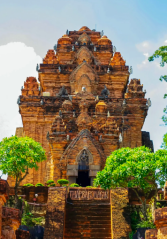
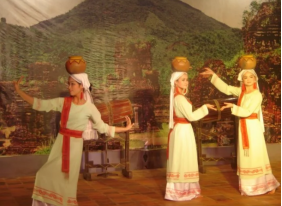
The origin of the Cham Kingdom is closely related to the local indigenous culture and the foreign Indian culture. Around the 2nd century AD, in the Linyi region in central Vietnam today, multiple tribes gradually merged and, influenced by Indian culture, began to form a unique Cham civilization. The Cham people believe in Hinduism, worship Shiva, and integrate Hindu religious rituals and artistic styles into their daily lives and national governance.
The Champa Kingdom was strategically located at an important node of the ancient Maritime Silk Road, making it an important trade transit point in Southeast Asia. With the prosperous maritime trade, the Champa Kingdom accumulated a lot of wealth and gradually became stronger.
The decline and fall of the Champa Kingdom
Since the 15th century, the Cham Kingdom has faced dual pressures from the Vietnamese Later Le Dynasty in the north and the Khmer Empire in the south. The Vietnamese Later Le Dynasty implemented a southward policy and continued to encroach on Cham’s territory. In 1471, the Later Le army broke through the Cham capital and captured the Cham king. Most of the territory of the Cham Kingdom was annexed by Vietnam, leaving only some areas in the south. After that, the power of the Cham Kingdom was greatly reduced and it became a vassal state of Vietnam.
In the 19th century, the Nguyen Dynasty of Vietnam further strengthened its control over the remaining territories of Champa. In 1832, the Nguyen Dynasty abolished the name of Champa, established counties, and completely incorporated the last territories of Champa into the territory of Vietnam. After a long period of external aggression and internal turmoil, the Cham Kingdom finally disappeared completely. During this process, a large number of Cham people were massacred and driven away, and some were forced to migrate to Cambodia, Laos and other places. The Cham people who remained in Vietnam gradually lost their political power and economic foundation.
The current situation of the Cham people
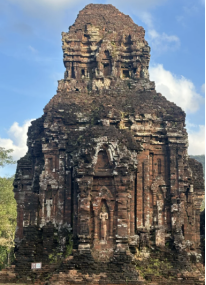
Today, the Cham people, as a minority in Vietnam, are mainly distributed in the southern and central coastal areas of Vietnam, with a population of about 150,000. Although the Cham Kingdom no longer exists, the Cham people still maintain their unique cultural traditions and religious beliefs.