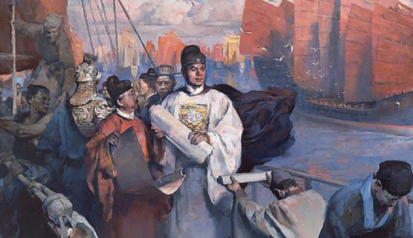
Zheng He, born in 1371, was an outstanding navigator and diplomat during the Ming Dynasty. At that time, the Ming Dynasty was strong, and its shipbuilding technology and navigation knowledge reached a high level. In order to promote national prestige and expand overseas trade and cultural exchanges, Emperor Chengzu of the Ming Dynasty sent Zheng He to lead a large fleet to the Western Ocean seven times, opening a magnificent maritime legend. His feat was more than half a century earlier than the ocean voyages of European navigators.
An unprecedented maritime feat
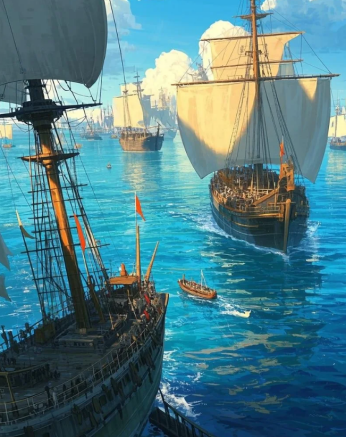
Zheng He’s seven voyages to the West were the most representative events in his life. From 1405 to 1433, the fleet led by Zheng He was huge. According to historical records, the largest treasure ship was about 485 feet long and 196 feet wide . The fleet was also equipped with various types of ships, such as grain ships and warships. The number of people at sea each time reached more than 20,000. The fleet set sail from Nanjing Longjiang Port and sailed to the Western Pacific and Indian Oceans, visiting more than 30 countries and regions, and the farthest reached the east coast of Africa and the coast of the Red Sea.
Zheng He play in the navigation activities ?
In this series of voyages, Zheng He played the dual important roles of fleet commander and diplomatic envoy. As a commander, he needed to carefully plan routes, organize material supplies, and manage a large crew. During the voyage, Zheng He relied on his rich sailing experience and outstanding leadership skills to successfully lead the fleet to deal with severe weather and complex sea conditions at sea many times. In the face of pirate threats, he rationally deployed warships, strengthened vigilance, and ensured the safety of the fleet.
As a diplomatic envoy, Zheng He presented exquisite Chinese silk, porcelain, tea and other gifts to local kings or leaders wherever he went, and also brought back local specialties, spices and rare treasures. He established diplomatic relations with various countries in a peaceful and friendly manner, spread Chinese culture and advanced technology, and promoted cultural exchanges between China and foreign countries.
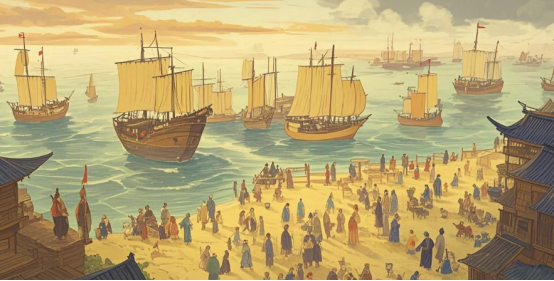
The Legacy Left by Zheng He’s Seven Voyages to the West
In terms of navigation technology, Zheng He’s fleet accumulated a large amount of valuable navigation data through its sailing practice, drew detailed navigation charts and compass books, and recorded geographical, meteorological, hydrological and other information along the way. These data have important reference value for the development of navigation in later generations. For example, “Zheng He’s Navigation Chart” is one of the earliest existing navigation atlases in the world, providing important navigation basis for sailors in China and neighboring countries.
In terms of cultural exchange, Zheng He’s voyages promoted the integration of Chinese and foreign cultures. Chinese Confucianism, architectural art, medicine and other knowledge spread overseas, and a large number of foreign cultural elements were also introduced. For example, Islamic culture spread further in China with Zheng He’s voyages, and many mosques were built in some coastal cities, changing the local religious and cultural pattern. In the field of literature and art, Zheng He’s deeds of sailing to the West became the creative material of many literary works, enriching China’s literary treasure house.
Although China’s maritime activities gradually decreased after Zheng He, his maritime spirit and achievements still inspire countless people to explore the ocean and understand the world.