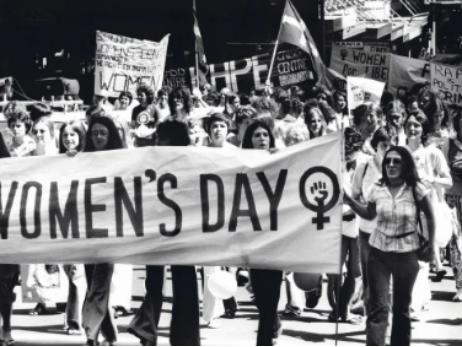
In the vast land of Asia, the feminist movement is surging and developing. Like a powerful wave, it is impacting the gender order of traditional society and profoundly changing people’s lives and concepts.
Historical Origins
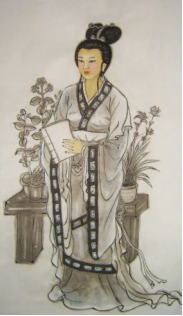
Throughout history, Asian women have been generally bound by patriarchal social structures and traditional ethics. In China, the concept of “three obediences and four virtues” has long dominated women’s social roles; Japan’s “good wife and virtuous mother” standard confines women to the family sphere. In India, women are faced with serious gender discrimination issues such as the dowry system and child marriage. These traditional customs have caused great harm to women’s physical and mental health.
However, even in such an oppressive environment, women’s resistance consciousness has never been completely extinguished. Since the late 19th century and early 20th century, with the introduction of Western ideas, the rise of national liberation movements and the advancement of industrialization, Asian women’s awakening consciousness began to sprout. They gradually stepped out of their families, participated in social activities, and worked hard to fight for equal rights.
The push for social change
After World War II, Asian countries have ushered in a wave of social change. Many countries have shaken off colonial rule and embarked on the path of independent development, and the social and economic structure has undergone tremendous changes. The rapid advancement of industrialization and urbanization has provided more employment opportunities for women. More and more women have left their families and entered factories, offices and other workplaces, and have begun to achieve a certain degree of economic independence. The change in economic status has led women to have higher expectations for their own social status. They are no longer satisfied with the traditional gender role positioning and have begun to actively fight for equal rights.
The impact of universal education
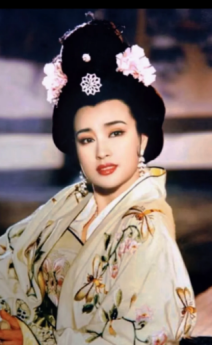
Education is an important driving force for the awakening of Asian women. In Japan, the educational reforms implemented during the Meiji Restoration gave women more opportunities to receive education. The “School System” promulgated in 1872 clearly stated that men and women should receive equal education. By the beginning of the 20th century, the literacy rate of Japanese women had increased significantly. These educated women began to enter the professional fields of teachers, nurses, etc., contributing to social development.
In China, women’s education has been further developed after the May Fourth Movement. In 1920, Peking University admitted female students for the first time, opening the precedent of coeducational higher education in China. More and more women have entered the fields of law, medicine, literature, etc. after receiving higher education.
The impact of cultural concepts
The feminist movement has had a huge impact on traditional cultural concepts in Asia. Traditional gender stereotypes have been widely questioned and criticized, and more and more people have begun to realize that men and women should be given equal rights and opportunities and should not be restricted by gender. In the field of culture and art, female creators express women’s emotions and demands through literature, film, music and other forms, showing women’s strength and value. Some film and television works have begun to focus on women’s lives and growth, breaking the previous single-image shaping of women and triggering in-depth thinking about gender issues in society.
The awakening of Asian women is a magnificent history of struggle. Through unremitting efforts, they have achieved remarkable achievements in various fields. Although they still face many challenges today, their courage and persistence have illuminated the way for the future development of women.