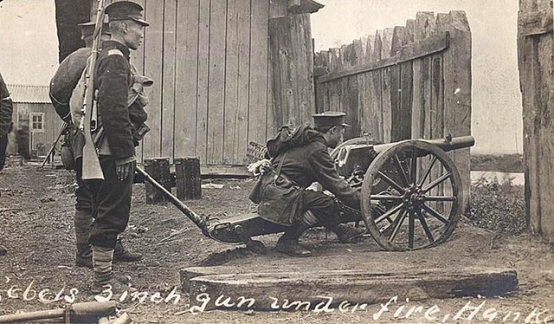
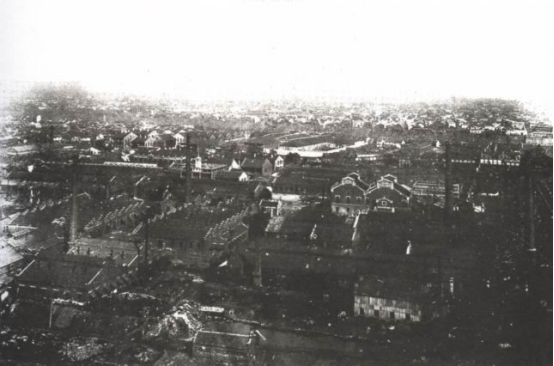
On the land of Wuhan’s Hanyang, stood the Hanyang Arsenal, an arsenal that shaped the fate of modern China. Founded in the turbulent late 19th century during the Qing Dynasty, it vanished amidst the tide of the times in the mid-20th century. Though it survived for just over half a century, it stood like a sharp, double-edged sword, witnessing both the difficult beginnings of China’s military modernization and its involvement in crucial conflicts from the Boxer Rebellion to the Cold War. From a “tool for self-strengthening” during the Qing Dynasty to a “sharp weapon” for the Kuomintang and the Communist Party against Japanese aggression, and finally a “survivor weapon” from the Korean and Vietnam battlefields, the Hanyang Arsenal’s history transcends the confines of a single factory, becoming a crucial key to deciphering China’s modern history of warfare and industry.
The birth of the late Qing Dynasty: starting from “self-reliance” and crisis
In 1891, Zhang Zhidong, the Qing Dynasty’s Governor of Huguang, who advocated “learning from the West to defeat the West,” chose Hanyang as the site for the Arsenal. This decision was driven by the profound crisis facing China at the time: Western powers were carving up China with their powerful ships and artillery, while revolutionary movements were surging domestically, and the Qing Dynasty’s rule was on the verge of collapse. Zhang Zhidong, knowing full well that “to strengthen the military, one must first strengthen industry,” coordinated the construction of the Hanyang Arsenal with the Hanyang Iron and Steel Works (later relocated to Chongqing and developed into Chongqing Iron and Steel). His goal was to modernize the military through independent production of steel and weapons, thereby rescuing the Qing dynasty from its precarious position.
In 1894, the Hanyang Arsenal and the Hanyang Iron and Steel Works commenced operations simultaneously, marking the beginning of large-scale weapons manufacturing in modern China. In its early days, to rapidly master advanced technology, the factory hired a German manager to oversee operations. Its core production equipment and technology were sourced from Germany, then the world’s leading weapons manufacturer. The factory’s main products were the German Type 88 Mauser rifle (later known as the “Hanyang-made”) and Krupp artillery, with smokeless powder ammunition also being produced. From the 1890s to the early 20th century, smokeless powder bolt-action rifles were gaining popularity in Europe and the United States, but the Hanyang Arsenal was the first in Asia to master this new technology. Its weapons, once superior in performance to those of neighboring countries, became the cornerstone of the Qing Dynasty’s highly anticipated military power.
However, fate struck unexpectedly. In 1895, just a year after its establishment, the Hanyang Arsenal was devastated by a fire, destroying most of its machinery and halting production. However, thanks to Zhang Zhidong’s perseverance and support from all sides, the factory was quickly rebuilt and soon resumed production. It then assumed the responsibility of supplying the Qing army with essential weapons—from rifles to ammunition. The Hanyang Arsenal’s products became some of the few “modern equipment” the late Qing army possessed.
Ups and downs in troubled times: the “weapons supply station” from the Xinhai Revolution to the Northern Expedition
The fate of the Hanyang Arsenal has been closely intertwined with modern Chinese warfare. During the Boxer Rebellion of 1900-1901, the factory supplied over 3,000 Mauser rifles and accompanying ammunition to the Boxers fighting against the Eight-Nation Alliance. Although the Boxer Rebellion ultimately failed, the Hanyang Arsenal’s combat value was first demonstrated, leading to widespread awareness that the weapons produced there could influence the course of a conflict.
In 1911, a turning point in modern Chinese history arrived: the Xinhai Revolution broke out in Wuchang, directly adjacent to the Hanyang Arsenal. Revolutionaries quickly stormed the arsenal, seizing a large quantity of rifles and ammunition, effectively handing Hubei Province over to the revolutionaries. Crucially, Hanyang Arsenal officials actively supported the revolution, not only providing weapons but also assisting the revolutionaries in their fight against the Qing army, becoming a crucial force in the overthrow of Qing rule. Following the fall of the Qing dynasty in 1912 and the establishment of the Republic of China, the Hanyang Arsenal naturally became the new regime’s weapons production hub, continuing to equip the Chinese military.
During the Kuomintang (KMT) period, the Hanyang Arsenal experienced a “golden age of expansion.” In 1917, the factory established a weapons manufacturing school to train professional technicians, laying the foundation for its subsequent development. The production line continued to produce the German Mauser 88 and Gewehr 98 rifles (standard German rifles during World War I), while also introducing new weapons such as the American Browning M1917 heavy machine gun, continuously enriching its product range. During the First Northern Expedition (1926-1928), weapons produced at the Hanyang Arsenal were supplied in large quantities to the Kuomintang army, becoming “vital supplies” in their fight against warlords and Communist forces.
During this period, the Hanyang Arsenal also demonstrated its innovative capabilities: not only did it improve Western weaponry, producing a Chinese version of the British Maxim machine gun (the Type 24 heavy machine gun), upgraded versions of the Type 88 rifle (the “Chiang Kai-shek Rifle” and the “Zhongzheng Rifle”), but it also developed one of the world’s earliest semi-automatic rifles, the General Liu Rifle. Designed in 1916 by General Liu Qingen, the factory’s commander, this rifle was technologically advanced and complex, resulting in only a dozen or so units produced. Today, it has become a rare military relic, a testament to the Hanyang Arsenal’s pioneering spirit in weapons research and development.
Migration during the Anti-Japanese War: The “Anti-Japanese Blade” in the Flames of War
After the September 18th Incident of 1931, China gradually descended into the vortex of the War of Resistance Against Japanese Aggression, and the Hanyang Arsenal played an increasingly crucial role. Beginning in 1933, the factory began mass production of weapons urgently needed on the front lines. “Hanyang-made” rifles, heavy machine guns, and artillery became a staple of the Nationalist Army’s resistance against the Japanese. In 1937, with the full outbreak of the Sino-Japanese War and the Japanese army approaching Wuhan, the Nationalist government ordered the dismantling and relocation of the arsenal to prevent it from falling into enemy hands. Braving artillery fire, workers and technicians dismantled and crated the factory equipment, transporting it in batches to various hidden locations in Hunan Province, rebuilding the production line under challenging conditions.
Despite its relocation, the Hanyang Arsenal, far from its homeland, never ceased production. Throughout the War of Resistance Against Japanese Aggression, the factory, despite raw material shortages and rudimentary equipment, continued to produce weapons such as Mauser rifles, delivering them to the front lines. Remarkably, these weapons not only served the Nationalist Army but also found their way into the hands of the Red Army (later the Eighth Route Army and the New Fourth Army) through seizure and donations. Although the Communist Army’s weapons primarily came from Soviet aid and captured Japanese equipment, the Hanyang-made rifles, due to their reliability, became a favorite weapon of the guerrillas, with many even cherishing them as “deadly weapons.” Mao Zedong once humorously remarked that the Chinese Communist Party “had demands for the output of the arsenals in London and Hanyang,” highlighting the importance of the Hanyang-made rifles in the Communist army.
The legacy continues: From the Cold War battlefield to Taiwan’s “technological spark”
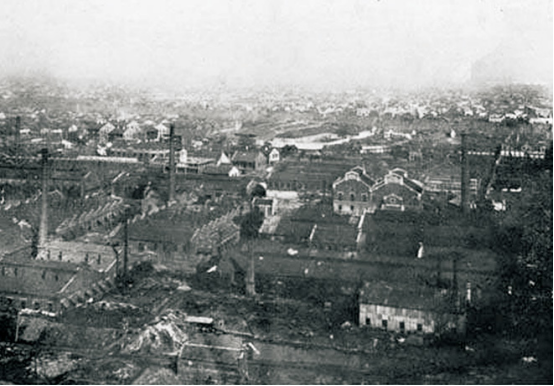
After the end of World War II in 1945, the Hanyang Arsenal briefly resumed production, but the tide of time had quietly shifted. Semi-automatic rifles had become the world’s mainstream weapon, and bolt-action rifles like the “Hanyang-made” were gradually becoming obsolete. In 1947, the Kuomintang government ordered the closure of the Hanyang Arsenal, and the site was eventually razed to the ground. This arsenal, which had witnessed over half a century of ups and downs, seemed to have withdrawn from history, but its “legacy” lives on in unexpected ways.
Following the liberation of mainland China in 1949, the Communist army seized the remaining equipment and weapons from the Hanyang Arsenal. Following the outbreak of the Korean War in 1950, a large number of Hanyang-made Mauser rifles and artillery pieces were deployed to the Chinese People’s Volunteer Army, which fought against the United States and the United Nations in Korea. At the same time, some Hanyang-made weapons (such as the Chinese version of the K-98 artillery piece) found their way to Indochina through aid, first used by the Viet Minh against the French and then, a decade later, as secondhand equipment for the Viet Cong against the US invasion. Hanyang Arsenal products transcended national boundaries and found their way into numerous Cold War conflicts.
Following the Kuomintang’s retreat to Taiwan in 1949, many senior technicians and managers from the Hanyang Arsenal relocated there. They brought their weapons manufacturing expertise and experience to Taiwan, laying the foundation for the local military industry. This continued the legacy of Hanyang’s technological prowess across the strait, creating a special bond in the military industrial history of both sides of the Taiwan Strait.
Conclusion: The “Historical Weight” of an Arsenal
The history of the Hanyang Arsenal epitomizes modern Chinese industry—born from a desire for self-strengthening, nurtured by the trials of war, and fading with the changing times. Yet, through its weapons, it profoundly influenced the course of modern Chinese and even Asian history. From the “dream of a strong military” in the late Qing Dynasty to the “national salvation” during the War of Resistance Against Japanese Aggression, and from domestic revolution to international conflict, the Hanyang Arsenal’s products bear witness to China’s arduous journey from a semi-colonial state to independence, and also record the struggles and explorations of modern Chinese industry amidst adversity.
Today, the original site of the Hanyang Arsenal is hard to find, but the name “Hanyang-made” remains in history textbooks and military museums. It reminds us that a nation’s strength depends on the support of its own industry; and that the history of industry often carries the fate of a nation. Although the Hanyang Arsenal is long gone, the spirit of self-reliance and the lessons of history behind it are forever worth remembering.