The Rise of Russian Oligarchs: A Post-Soviet Phenomenon
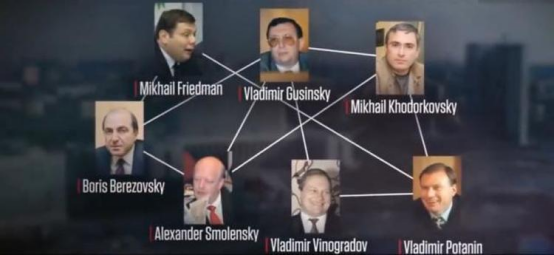
The collapse of the Soviet Union in 1991 ushered in an era of unprecedented economic and political upheaval in Russia. Amidst the chaos of transition, a new class of incredibly wealthy and influential individuals, dubbed “oligarchs,” emerged. These figures capitalized on the rapid privatization of state assets, often acquiring vast enterprises and natural resources for fractions of their true value. Their rise was not merely an economic phenomenon but a profound political one, as their wealth quickly translated into significant leverage over the nascent democratic institutions and the ailing government of Boris Yeltsin.
The Era of Wild Capitalism and Privatization
The foundation of oligarchic power was laid during the “loans-for-shares” schemes of the mid-1990s. In an attempt to raise funds for the cash-strapped government and ostensibly create a market economy, state-owned enterprises were sold off, often to insiders or those with close connections to government officials. These schemes were notoriously opaque and rife with corruption, allowing a select few to accumulate immense industrial and resource holdings, from oil and gas to metals and media. This period of “wild capitalism” created a highly concentrated form of wealth, where a handful of individuals controlled key sectors of the Russian economy.
From Businessmen to Political Kingmakers
With their economic power solidified, the oligarchs rapidly extended their influence into the political sphere. They funded political parties, controlled major media outlets, and exerted direct pressure on government decisions. During the 1996 presidential election, for instance, a group of prominent oligarchs famously banded together to support Boris Yeltsin’s re-election, fearing that a communist victory would lead to a reversal of privatization and the loss of their assets. This demonstrated their capacity not just to influence, but to actively shape the political destiny of the nation, effectively becoming kingmakers in a fragile democracy. Their independent political power was seen by many, including future leaders, as a threat to state sovereignty and stability.
Putin’s Ascent: Confronting Independent Power
When Vladimir Putin assumed the presidency in 2000, he inherited a country where economic power was fragmented among these powerful, often competing, oligarchic clans. His central mission, as he articulated it, was to restore state control and build a “vertical of power.” This vision directly clashed with the independent political and economic sway wielded by the oligarchs. Putin recognized that for the state to be truly sovereign and for his authority to be absolute, the oligarchs’ capacity to challenge or circumvent state power had to be dismantled.
The Early Years: Setting the Stage for Conflict
Putin’s initial moves were cautious but firm. He understood that a direct, immediate confrontation could destabilize the economy and provoke a powerful backlash. Instead, he began by signaling a new order. In a famous meeting with leading oligarchs shortly after his inauguration, Putin laid out his terms: they could keep their wealth and businesses, but they must stay out of politics. This was a clear ultimatum, a declaration that the era of oligarchs dictating state policy was over. Those who understood and accepted this new paradigm could continue to thrive; those who challenged it would face severe consequences.
The ‘Equal Distance’ Doctrine and its Implications
Putin articulated a doctrine of “equal distance” for all businessmen from the Kremlin, implying that no single oligarch would receive preferential treatment or be allowed to exert undue influence. In practice, this meant bringing all economic actors under the firm grip of state authority. This was a stark contrast to the Yeltsin years, where political access and patronage often dictated economic success. The implication was clear: loyalty to the state, and specifically to the Kremlin, was now the paramount condition for economic survival and prosperity. This doctrine served as a warning shot, indicating that the rules of engagement had fundamentally changed, and the state, under Putin, was reasserting its dominance.
Strategies of Subjugation: How Putin Reined in the Oligarchs
Putin’s campaign against the politically independent oligarchs was multi-faceted, employing legal, administrative, and sometimes extra-legal means. His approach was systematic, targeting those who openly defied his “stay out of politics” mandate, while co-opting others into a new system of state-loyal capitalism. This phase marked a significant shift from the chaotic freedom of the 1990s to a more centralized, authoritarian control over Russia’s economic elites.
Legal Battles and Asset Seizures: The Khodorkovsky Case
Perhaps the most emblematic case was that of Mikhail Khodorkovsky, the head of Yukos oil company and once Russia’s wealthiest man. Khodorkovsky, who began funding opposition parties and openly criticized the Kremlin, was arrested in 2003 on charges of fraud and tax evasion. His company, Yukos, was subsequently broken up and its assets largely absorbed by state-owned Rosneft. This highly publicized trial and conviction sent a chilling message to other oligarchs: political defiance would lead to severe repercussions, including the loss of their empires and personal freedom. The legal system, under Putin, became a powerful tool for political control.
Exile and Political Isolation: The Fates of Berezovsky and Gusinsky
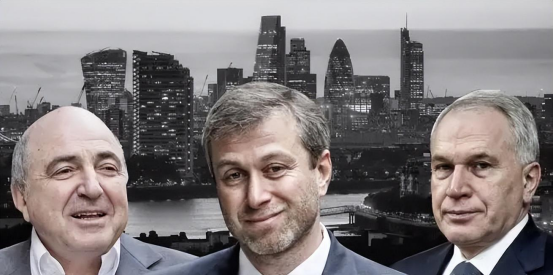
Other prominent oligarchs who challenged Putin faced different, but equally decisive, fates. Boris Berezovsky, a powerful media mogul and political operator, fled Russia in 2000 after falling out with Putin and became a vocal critic from abroad, eventually dying in suspicious circumstances. Vladimir Gusinsky, another media magnate whose NTV channel was critical of the government, faced criminal charges and was forced to sell his media empire to state-controlled Gazprom before going into exile. These cases demonstrated that even without direct imprisonment, the Kremlin could effectively neutralize political opponents by forcing them out of the country and dismantling their economic bases.
Co-optation and Loyalty: Creating the “Silovarchs”
While some oligarchs were subdued or exiled, many others adapted to the new reality. Putin encouraged the rise of a new class of business elites, often drawn from the “siloviki” (former security service and military personnel), who were deeply loyal to the state. These “silovarchs” were granted lucrative state contracts and access to national resources, but their wealth and influence were entirely dependent on their unwavering allegiance to the Kremlin. This strategy ensured that the economic elite served as an extension of state power rather than an independent force, creating a symbiotic relationship where loyalty was rewarded with prosperity, but independent political ambition was ruthlessly suppressed.
The Why Behind the What: Putin’s Motivations and the Vertical of Power
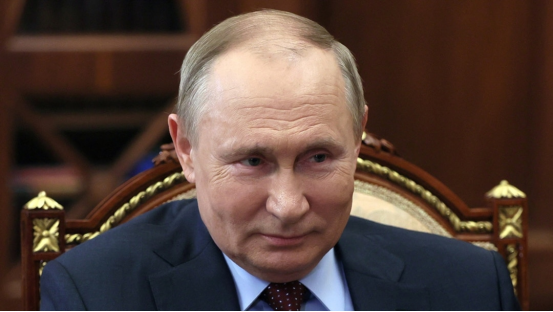
Understanding Putin’s relentless pursuit of control over the oligarchs requires a deeper look into his political philosophy and strategic objectives. His actions were not merely about personal power, but about a grander vision for Russia’s statehood and its place in the world, shaped by his background and experience.
Reasserting State Authority and National Interests
From Putin’s perspective, the 1990s were a period of national humiliation, characterized by weak state institutions, rampant corruption, and external interference. The independent power of the oligarchs, often seen as self-serving and undermining national interests, was antithetical to his vision of a strong, centralized state. His campaign was fundamentally about reasserting the state’s paramount authority over all spheres of life, including the economy, to ensure national sovereignty and stability. This was a direct response to what he perceived as the chaos and vulnerability of the post-Soviet era.
Consolidating Economic Control and Resource Wealth
Beyond political control, Putin aimed to bring Russia’s vast natural resources and strategic industries back under state command. The privatization schemes of the 1990s had placed immense wealth in private hands, often without significant benefit to the state budget or the broader populace. By reasserting control, whether through direct nationalization or by placing loyalists in charge, the Kremlin gained direct access to the revenues from oil, gas, and other resources. This economic consolidation provided the financial muscle to fund state projects, modernize the military, and pursue an independent foreign policy, thereby strengthening the state’s geopolitical position.
Eliminating Political Opposition and Ensuring Stability
A key motivation was to eliminate any potential sources of independent political opposition. Oligarchs who controlled media outlets or funded political parties represented alternative centers of power that could challenge the Kremlin’s narrative or even its leadership. By neutralizing these figures, Putin removed significant threats to his political dominance and ensured a more predictable and controllable political landscape. This was essential for his long-term goal of establishing a stable, albeit authoritarian, political system where dissent was minimized and state control was absolute.
The Lasting Legacy: A New Russian Power Dynamic
Putin’s successful campaign against the independent oligarchs fundamentally reshaped Russia’s political economy. The era of powerful, politically autonomous business moguls dictating state policy is largely over. In its place, a new system has emerged where economic success is inextricably linked to loyalty to the state and the Kremlin.
State Capitalism and the Absence of Independent Economic Power
The current Russian economic model can be best described as a form of state capitalism, where key strategic sectors are either directly owned by the state or controlled by individuals and corporations with close ties to the government. While private enterprise exists, particularly in smaller sectors, the commanding heights of the economy—energy, banking, defense, and infrastructure—are firmly under state influence. This has effectively eliminated an independent economic class capable of challenging state power, ensuring that economic resources serve state objectives rather than acting as a check on political authority.
Implications for Governance, Corruption, and Future Stability
This new power dynamic has profound implications. On one hand, it has arguably brought a degree of stability and predictability to Russia after the turbulent 1990s. The state’s ability to mobilize resources for national projects has increased. On the other hand, it has concentrated immense power in the hands of the Kremlin, fostering a system where corruption is often intertwined with state patronage, and accountability is minimal. The blurring of lines between state and private interests, coupled with the suppression of independent voices, raises long-term questions about transparency, innovation, and the sustainability of this model. It also means that future transitions of power could be highly centralized and potentially turbulent, lacking the checks and balances that an independent economic elite might provide.
Expert Advice: Navigating Geopolitical Power Plays
Understanding the dynamics between political leaders and economic elites, as exemplified by Putin and the Russian oligarchs, offers crucial insights for analyzing contemporary geopolitics and business environments. Here’s some expert advice:
- Analyze the “Why”: Always look beyond the immediate actions to understand the underlying motivations of political leaders. Is it about national security, personal power, economic control, or ideological purity? Putin’s actions were rooted in a desire to restore state sovereignty.
- Identify Power Centers: In any political system, identify who truly holds power—is it a single leader, a ruling party, a military junta, or a coalition of economic elites? In Russia, power consolidated under the President.
- Assess Rule of Law vs. Rule by Law: Differentiate between a genuine rule of law, where everyone is subject to the same legal framework, and “rule by law,” where the law is used as a tool by the powerful to achieve political ends. The Khodorkovsky case is a prime example of the latter.
- Monitor Elite Cohesion: The stability of authoritarian regimes often depends on the cohesion of its elites. Watch for signs of internal divisions, purges, or shifts in loyalty among key economic or security figures, as these can signal potential vulnerabilities.
- Understand State-Business Relations: In many countries, especially those with strong state control, business success is intrinsically linked to political alignment. Companies operating in such environments must navigate these relationships carefully, understanding that political patronage can be both a boon and a vulnerability.
Key Terms & Concepts: An In-Depth Analysis
To fully grasp the narrative of Putin’s power game, it’s essential to define and analyze the core concepts that shaped this historical period.Oligarch: Originally a term for a member of an oligarchy (rule by a small group), in post-Soviet Russia, it refers to a small number of extremely wealthy businessmen who gained control of vast state assets during privatization and wielded significant political influence. They often acquired their wealth through non-transparent means and exploited weak regulatory frameworks. Siloviki: A Russian term for politicians who came from the security, military, or law enforcement services (e.g., KGB, FSB, GRU, MVD). Putin himself is a prominent silovik. These individuals often emphasize state power, order, and national security, and they have played a crucial role in consolidating Putin’s “vertical of power” and controlling economic assets through state corporations or loyal proxies. Privatization: The process of transferring ownership of state-owned enterprises to private hands. In Russia, the 1990s saw rapid and often controversial mass privatization, including the infamous “loans-for-shares” program. While intended to create a market economy, it often resulted in cronyism, corruption, and the concentration of wealth in the hands of a few connected individuals who became the first generation of oligarchs. Vertical of Power: A term coined by Vladimir Putin to describe his system of centralized political control in Russia. It refers to a hierarchical structure where power flows from the top (the President) downwards through all levels of government—federal, regional, and local—with minimal independent decision-making at lower levels. This system was designed to eliminate regional autonomy and consolidate the Kremlin’s authority, effectively neutralizing any potential challenges from local elites or independent institutions.
Comparative Analysis: Old vs. New Russian Economic Elites
The transition from the Yeltsin era to Putin’s presidency brought about a fundamental shift in the nature and role of Russia’s economic elites. The table below highlights the key differences between the “Old Oligarchs” of the 1990s and the “New Elites” (often “Silovarchs”) under Putin.
| Feature | Old Oligarchs (1990s) | New Elites / Silovarchs (Putin Era) |
|---|---|---|
| Origin of Wealth | Rapid, often opaque privatization of state assets (e.g., loans-for-shares). | State contracts, patronage, control of state corporations, often from security services background. |
| Political Role | Independent political influence, funding opposition, media control, kingmakers. | Loyalty to the Kremlin, executors of state policy, no independent political ambition. |
| Relationship with State | Often confrontational, challenged state authority, operated with relative autonomy. | Subservient, dependent on state patronage and protection, integrated into the “vertical of power.” |
| Media Control | Owned and operated independent (often critical) media empires. | Control media on behalf of the state or through state-aligned entities. |
| Risk Profile | High risk of political confrontation, asset seizure if challenged state. | Low political risk if loyal; high risk if perceived disloyal or independent. |
| Key Figures | Berezovsky, Gusinsky, Khodorkovsky, Potanin (initially). | Sechin, Rotenberg brothers, Timchenko, Kovalchuk. |
Frequently Asked Questions (FAQ)
What made the Russian oligarchs so powerful in the 1990s? The oligarchs gained immense power primarily through the chaotic and often corrupt privatization of vast state assets following the collapse of the Soviet Union. They acquired control over critical sectors like oil, gas, and metals for very low prices. Their economic power quickly translated into political influence as they funded parties, controlled media, and exerted direct pressure on the weak Yeltsin government, making them key players in national politics. How did Putin initially approach the oligarchs when he came to power? Putin’s initial approach was a clear ultimatum: oligarchs could keep their wealth but had to stay out of politics. He articulated a doctrine of “equal distance” for all businessmen from the Kremlin, signaling an end to the era of independent political influence wielded by economic elites. Those who defied this new rule faced severe consequences. What were the main strategies Putin used to rein in the independent oligarchs? Putin employed a multi-pronged strategy including legal persecution (e.g., the Khodorkovsky case with charges of fraud and tax evasion), forcing critics into exile (e.g., Berezovsky and Gusinsky), and co-opting others by offering state contracts and protection in exchange for unwavering loyalty. This created a new class of “silovarchs” who served state interests. What is the “vertical of power” and how did it affect the oligarchs? The “vertical of power” is Putin’s system of centralized political control, where authority flows strictly downwards from the President. For the oligarchs, this meant an end to their independent political maneuverings. They were either integrated into this vertical as loyal economic agents of the state or eliminated as independent forces, ensuring that all significant economic and political power resided with the Kremlin. What is the long-term impact of Putin’s power game on Russia’s economy and politics? The long-term impact has been the establishment of a state-capitalist model where key economic sectors are controlled by the state or its loyalists, and an independent economic elite capable of challenging the government has largely been neutralized. Politically, it has consolidated immense power in the hands of the Kremlin, enhancing stability but at the cost of genuine political competition, transparency, and the rule of law.