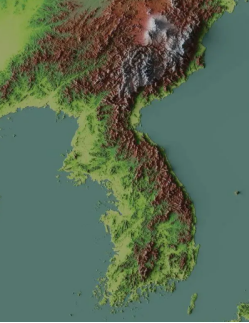
The Korean Peninsula is located in East Asia, with a total area of about 222,000 square kilometers. It borders the Sea of Japan to the east and the Yellow Sea to the west. Over the long years, the history of the Korean Peninsula has been full of ups and downs, and has been deeply influenced by neighboring powers and the global situation. From the origin of early civilization, to the change of dynasties, foreign invasions, to the division and confrontation in modern times, its development process has been full of twists and turns, and is unique in world history.
Early History of the Korean Peninsula
The history of the Korean Peninsula can be traced back to ancient times. The Paleolithic Age began around 500,000 BC, when humans lived by hunting and gathering, making simple stone tools and using fire. Around 5,000 BC, the Korean Peninsula entered the Neolithic Age, and animal husbandry, farming, and handicrafts such as pottery began to appear.
The Korean Peninsula has undergone a feudal system evolution from the Three Kingdoms (Goguryeo, Baekje, and Silla) to the Unified Silla, Goryeo Dynasty, and Joseon Dynasty. By the end of the 19th century, Korea (the Joseon Dynasty) still continued the feudal monarchy, implemented Confucianism and governed the country, and had a strict social hierarchy. The economy was mainly based on agriculture, with limited commercial scale, and industry and commerce developed slowly under the dynasty’s strict hierarchical and industry control.
Japanese colonial period (1910-1945)
In 1910, Japan annexed the Korean Peninsula through the Treaty of Annexation of Korea, the Korean Empire was destroyed, and Korea became a Japanese colony. During the colonial rule, Japan brutally oppressed and plundered Korea, forced the implementation of slave education, prohibited Koreans from using their own language, and attempted to assimilate the Korean nation culturally and spiritually. However, the Korean people never stopped resisting, and the March 1st Movement that broke out in 1919 was a nationwide anti-Japanese independence movement.
The establishment of the Republic of Korea
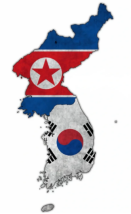
After the end of World War II, according to the arrangement of the Yalta Conference, the Korean Peninsula was respectively administered by the United States and the Soviet Union. On August 15, 1948, with the support of the United States, the Republic of Korea was established in the southern part of the peninsula; on September 9 of the same year, with the support of the Soviet Union, the Democratic People’s Republic of Korea was established in the northern part of the peninsula. Thus, the Korean Peninsula was officially divided into two countries.
The Korean War and Postwar Development
On June 25, 1950, the Korean War broke out, and the North Korean army crossed the 38th parallel and attacked South Korea. The United States quickly intervened and led the UN Security Council to pass a resolution to form a United Nations army to support South Korea. In the early stages of the war, the North Korean army made smooth progress, once occupied Seoul, and forced the South Korean army to the vicinity of Busan. But then the US military landed in Incheon, turning the tide of the war, and the United Nations army advanced northward, approaching the Sino-North Korean border. At the request of North Korea, China sent volunteers to resist the US and aid Korea. After three years of fierce fighting, on July 27, 1953, the warring parties signed an armistice agreement in Panmunjom, and the Korean Peninsula was divided into two regimes along the 38th parallel demilitarized zone. This division continues to this day.
After the war, with the support of the United States, South Korea implemented a series of economic reforms, gradually shifting from import-substitution industrialization to an export-oriented economy, achieving economic take-off and becoming one of the four Asian tigers, with remarkable achievements in electronics, automobiles, entertainment and other industries. With the assistance of the Soviet Union, North Korea carried out socialist construction, developed a planned economy, and made efforts to explore in the fields of agriculture and industry, but faced many challenges in economic development due to long-term external sanctions.
The history of the Korean Peninsula is complex and tortuous. Its development process has not only shaped the current national forms of North Korea and South Korea, but also profoundly influenced the political, economic and cultural landscape of Northeast Asia.