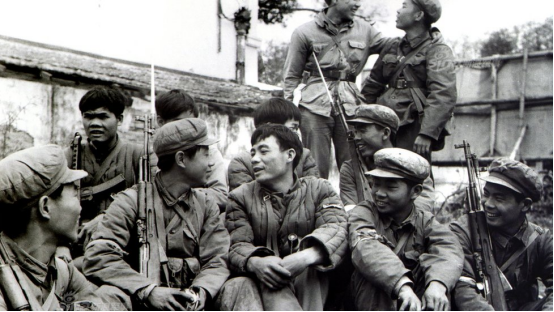
The Vietnam War (1955-1975) stands as one of the most controversial and pivotal conflicts of the 20th century, a crucible that reshaped global geopolitics, challenged American foreign policy, and left an indelible mark on the societies of both Vietnam and the United States. Far more than a simple military confrontation, it was a complex interplay of Cold War ideologies, post-colonial nationalism, domestic political pressures, and evolving military strategies. Understanding this conflict requires a deep dive into “the why” behind the decisions made, the principles at stake, and the historical context that fueled its tragic trajectory. This ultimate guide aims to unravel the intricate layers of the Vietnam War, from the initial seeds of U.S. involvement to the eventual withdrawal, exploring the profound lessons learned and its enduring legacy.
The Genesis of Conflict: Cold War, Decolonization, and Divided Vietnam
To comprehend America’s deep involvement in Vietnam, one must first grasp the immediate post-World War II global landscape. The collapse of European colonial empires coincided with the rise of the Cold War, creating a vacuum in newly independent nations that became battlegrounds for ideological supremacy between the United States and the Soviet Union. Vietnam, a former French colony, was a prime example of this dynamic.
French Indochina’s Legacy and Vietnamese Nationalism
For centuries, Vietnam had resisted foreign domination, most recently under French colonial rule since the late 19th century. During World War II, Japan occupied Vietnam, further fueling nationalist sentiments. After Japan’s defeat, Ho Chi Minh, a communist and fervent nationalist, declared Vietnam’s independence, forming the Democratic Republic of Vietnam (DRV). The French, however, sought to reassert control, leading to the First Indochina War (1946-1954). This conflict pitted the French colonial forces, supported by the U.S. (albeit reluctantly at first), against Ho Chi Minh’s Viet Minh, a highly effective guerrilla force. The U.S. saw France as a crucial ally in containing communism in Europe and thus tacitly supported its efforts in Southeast Asia, viewing Ho Chi Minh primarily through a Cold War lens rather than as a nationalist leader.
The Domino Theory: Fear of Spreading Communism
A cornerstone of U.S. foreign policy during the Cold War was the “Domino Theory,” articulated by President Dwight D. Eisenhower in 1954. This theory posited that if one country in