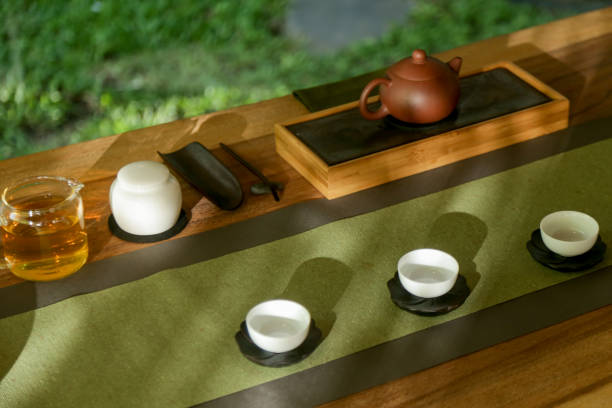
The Chinese tea ceremony is far more than the simple act of preparing a beverage; it is a sophisticated cultural tapestry woven over three millennia. From its legendary beginnings as a medicinal antidote to its elevation as a form of high art and spiritual practice, tea has remained the “national drink” of China. This guide delves deep into the historical transitions, philosophical underpinnings, and the meticulous aesthetic choices that define the modern tea ceremony (Chadao).
The 3,000-Year Historical Evolution of Chinese Tea Culture
The journey of tea in China began nearly 3,000 years ago, moving through distinct phases that mirrored the social and political changes of the empire. Understanding this timeline is essential for appreciating the depth of the ceremony as it exists today.
Medicinal Roots and the Legend of Shennong
In the prehistoric era, tea was primarily regarded for its pharmacological properties. Legend credits the Emperor Shennong, the father of Chinese medicine, with the discovery of tea when wild leaves fell into his pot of boiling water. Early records suggest tea was consumed as a “medicinal brew,” often boiled with other herbs, ginger, and salt to treat ailments ranging from digestive issues to lethargy. During the Zhou and Han dynasties, it transitioned from a strictly medicinal plant to a vegetable-like food source, often incorporated into soups.
The Tang Dynasty: The Birth of the Classic of Tea
The Tang Dynasty (618–907 AD) marked the first true “Golden Age” of tea. It was during this period that Lu Yu, known as the “Sage of Tea,” authored The Classic of Tea (Cha Jing). This seminal work standardized everything from the cultivation of tea leaves to the specific tools required for brewing. In the Tang era, tea was typically processed into “tea bricks,” which were roasted, ground into powder, and then boiled in water. This period also saw the emergence of tea as a social bridge between the imperial court, scholars, and the common people.
The Song Dynasty: The Art of Whisked Tea
The Song Dynasty (960–1279 AD) refined the ceremony into a highly competitive art form. This era popularized “Dian Cha,” where finely ground powdered tea was whisked in a bowl to create a dense, white foam—a precursor to the Japanese Matcha ceremony. Tea competitions (Dou Cha) became a favorite pastime of the elite, where the quality of the tea and the persistence of the foam were judged with extreme scrutiny. This was also the time when black-glazed ceramics, like the famous Jian ware, became popular to better showcase the white tea froth.
The Ming and Qing Dynasties: The Shift to Loose-Leaf Steeping
The Ming Dynasty (1368–1444 AD) brought a radical change when the first Ming Emperor, Zhu Yuanzhang, banned the production of tea bricks to reduce the burden on farmers, mandating the use of loose-leaf tea instead. This led to the development of the steeping method we use today. The invention of the Yixing purple clay teapot during this time revolutionized the brewing process, allowing for the “Gongfu Cha” (Kung Fu Tea) style to emerge, focusing on the precise control of water temperature and steeping time.

The Spiritual Heart: Tea and Zen Philosophy
The Chinese tea ceremony is inextricably linked to the three pillars of Chinese thought: Confucianism, Taoism, and Buddhism. The phrase “Cha Chan Yi Wei” (Tea and Zen are of one flavor) encapsulates the spiritual essence of the practice.
The Concept of Harmony (He)
At the center of the ceremony is the pursuit of harmony. This involves a balance between the tea, the water, the fire, the tools, and the participants. Practitioners believe that through the focused preparation of tea, one can align their internal energy (Qi) with the natural world. This reflects the Taoist principle of “Wu Wei” or effortless action, where the movements of the tea master flow naturally without force.
Tea as a Gateway to Mindfulness
In Buddhist monasteries, tea was used to keep monks alert during long hours of meditation. Over time, the preparation itself became a form of “moving meditation.” Every gesture—from the way the teapot is held to the circular motion of pouring—is designed to anchor the practitioner in the present moment. The ritual provides a sanctuary of stillness in an otherwise chaotic world, allowing for self-reflection and mental clarity.

Designing the Tea Space: Balancing Aesthetics and Practicality
The physical environment where the tea ceremony takes place, known as the “Chaxi” (Tea Space), is a critical component of the overall experience. A well-designed tea space should evoke a sense of tranquility while remaining highly functional for the brewer.
The Role of Tea Tablecloths and Fabrics
The tea tablecloth is the foundation of the Chaxi. It serves both an aesthetic and a practical purpose. Practically, it protects the tea table and absorbs accidental spills, preventing water from pooling around the delicate tea ware. Aesthetically, it sets the tone for the entire session.
- Linen and Cotton: These materials are highly favored for their natural texture and excellent water absorption. They reflect a “Wabi-Sabi” or rustic aesthetic that aligns with Zen principles.
- Silk and Brocade: Used for more formal or imperial-style ceremonies, these fabrics add a layer of elegance and vibrant color, often featuring traditional motifs like clouds or dragons.
- Color Psychology: Neutral tones (beige, gray, soft greens) are preferred for meditation-focused sessions, while deep reds or blues may be used to celebrate specific seasons or festivals.
Essential Accessories and Their Placement
A complete tea set includes several specialized tools, each with a specific role. The arrangement of these items must follow a logical flow to ensure the “tea path” is unobstructed.
| Accessory | Function | Aesthetic Value |
|---|---|---|
| Gaiwan/Teapot | The primary brewing vessel. | Represents the “Heart” of the ceremony. |
| Fairness Cup (Cha Hai) | Ensures even tea strength for all guests. | Symbolizes equality and transparency. |
| Tea Pet | A small clay figure “nourished” by tea. | Adds a playful, personal element to the table. |
| Tea Runner | A long, narrow cloth placed over the table. | Defines the visual boundary of the brewing area. |

Mastering the Gongfu Cha Ritual: Step-by-Step
The “Gongfu Cha” (Tea with Effort) is the most recognized form of the Chinese tea ceremony. It emphasizes the skill of the brewer and the quality of the tea leaves, typically Oolong or Pu-erh.
Step 1: Warming the Vessels
The ceremony begins by pouring boiling water into the teapot and cups. This is not just for hygiene; it ensures that the temperature of the water remains stable when it finally touches the tea leaves, preventing a sudden drop in heat that could mute the tea’s aroma.
Step 2: The Awakening of the Leaves
The dry leaves are placed in the warmed pot, and a small amount of water is poured over them and immediately discarded. This “rinsing” step washes away dust and allows the leaves to start unfurling, “awakening” the dormant flavors for the first true infusion.
Step 3: High Pouring and Low Serving
When brewing, the water is poured from a height to aerate the water and agitate the leaves. However, when pouring the finished tea into the cups, the vessel is kept low to the cup. This prevents the aroma from dissipating and avoids creating excessive bubbles, maintaining the tea’s silky texture.
Step 4: Appreciating the Fragrance and Color
Before tasting, guests are encouraged to observe the color of the liquor and inhale the aroma from the “snifter cup” or the lid of the Gaiwan. A high-quality tea will offer multiple layers of fragrance, from floral and fruity to woody and roasted notes.

Frequently Asked Questions (FAQ)
- Q1: What is the difference between Chinese Gongfu Cha and the Japanese Tea Ceremony?
- While both share historical roots, Gongfu Cha focuses on the “art of brewing” loose-leaf tea to extract maximum flavor through multiple short infusions. The Japanese ceremony (Sadō) is more focused on the “ritual of preparation” using powdered Matcha and emphasizes strict, choreographed movements and Zen etiquette.
- Q2: Why is the first pour of tea often discarded?
- The first pour, known as the “rinse,” serves two purposes: it cleanses the tea leaves of any impurities or dust from the drying process and it “awakens” the leaves, allowing them to open up so that the subsequent infusions provide a fuller, more complex flavor profile.
- Q3: How do I choose the right tablecloth for my tea set?
- You should consider both the material and the visual theme. For Yixing clay pots, natural linen in earthy tones works best. For delicate porcelain, silk or fine cotton with subtle patterns is more appropriate. Ensure the fabric is absorbent enough to handle small drips without staining quickly.
- Q4: Can any tea be used in a traditional ceremony?
- Technically yes, but the Gongfu style is best suited for teas that evolve over multiple steepings, such as Oolong, Pu-erh, and some high-grade Black teas. Green teas are more delicate and are often brewed in glass vessels using a simpler method to appreciate the leaf movement.
- Q5: What is the significance of the “Tea Pet”?
- A tea pet is a small ceramic figure, usually made of Yixing clay, placed on the tea tray. During the ceremony, the brewer “feeds” the pet by pouring leftover tea or the rinse water over it. Over time, the clay absorbs the tea’s oils and develops a glossy patina and a subtle tea scent, symbolizing the accumulation of good fortune and the passage of time.