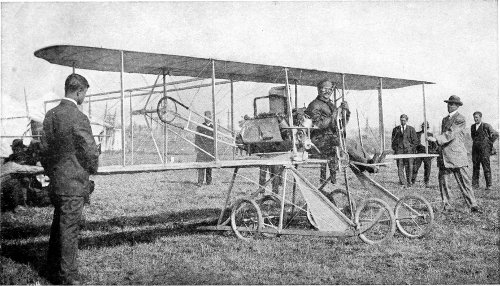
After the Wright brothers achieved humanity’s first powered flight at Kitty Hawk in 1903, the flames of aviation quickly spread across the globe. Among these early daring aviators were American James C. “Bud” Mars (1876-1944) and U.S. Army Captain Thomas Scott Baldwin (1854-1923), not only crucial figures in American aviation history but also brought the wonders of flight to Asia. In 1911, these two pioneers embarked on a tour of air shows across Asia, their simple yet powerful biplanes. Their roaring engines and breathtaking acrobatic feats opened a door to the skies for Asian nations, which at the time knew little about flying machines. Their journeys spanned Hawaii, Japan, India, Thailand, China, the Philippines, and elsewhere, inspiring both awe and awe while quietly sowing the seeds for the burgeoning Asian aviation industry.
The “Pre-Asian Era” of Aviation Pioneers: From American Skies to the World Stage
Before setting foot on Asian soil, Mars and Baldwin had already written legends in American aviation. Mars, the eleventh American pilot to receive a pilot’s license, was renowned for his “death-defying” flying style. He flew over Arkansas, Hawaii, and other locations, becoming the first pilot to cross multiple states. He also experienced near-drowning in the Atlantic Ocean and a near-crash in the Rocky Mountains. These thrilling experiences made him a household name in the United States as an “air hero” in the early 20th century.
Baldwin’s aviation career began much earlier, in the era of hot air balloons. In 1885, he completed a historic parachute jump from a hot air balloon. Later, he combined hot air balloons with trapeze artists in circus performances, creating highly entertaining aerial shows. When the Wright brothers’ biplane ushered in the era of powered flight, Baldwin quickly mastered this new technology. His “Red Devil” biplane, with its vibrant paint job and outstanding performance, became an iconic figure in American aviation at the time.
Despite their distinct styles—Mars excelled at breathtaking stunts, Baldwin possessed both experience and composure—the two were united by their shared passion for flying. In late 1910, Baldwin was invited to organize an aviation exhibition in the Asia-Pacific region, and he immediately invited Mars and fellow pilot Todd Shriver to join him. In early 1911, the three embarked on a ship bound for Asia with their aircraft, marking the beginning of a journey destined to rewrite the history of Asian aviation.
The “Iron Bird” over Asia: An Aviation Tour of Asia in 1911
In Asia in 1911, the vast majority of people had never seen a self-flying “giant steel bird.” When Mars and Baldwin’s biplanes appeared in the skies around the world, they caused a sensation wherever they went—awe, fear, and a heightened curiosity about the unknown skies.
Their first stop in Asia was the Philippines, where Mars made history. At the 1911 Manila Carnival, Mars flew an airplane around the Carnival Tower, becoming the “first person to fly over the Philippines.” According to records, nearly the entire city poured into the streets, with nearly 750,000 spectators stopping to watch. The cheers of the crowds blended with the roar of the aircraft’s engines, marking the first “highlight” in Philippine aviation history. More significantly, Mars and Baldwin sold aircraft to one of the country’s earliest flight schools. These aircraft, with their “American heritage,” laid the initial hardware foundation for air travel in the Philippines.
After leaving the Philippines, their next stop was Japan. In Osaka, the air show reached its peak—750,000 people flocked to watch the flight demonstrations, setting a record for the number of air show spectators worldwide at the time. Mars piloted the plane to perform stunts such as rolls and dives, and the sound of the wings cutting through the air made the audience hold their breath; Baldwin piloted the “Red Devil” to demonstrate the charm of stable flight. These two styles of performances gave the Japanese people a more comprehensive understanding of “aircraft.” However, cultural and cognitive differences also caused minor episodes: Mars later recalled that when he was flying in a Japanese village, the villagers had never seen an airplane before and mistakenly thought it was an “ominous object” and almost attacked him; during his stay in South Korea, the Japanese authorities even had to send people to protect them to prevent the frightened villagers from causing conflicts.
Their journey also covered more Asian countries: In Siam (Thailand), King Rama VI took a Mars plane and completed a short flight of 12 miles (about 19 kilometers), becoming one of the first monarchs in Thai history to ride an airplane. This flight also aroused the Thai royal family’s strong interest in aviation; in India, Indonesia and other places, their aircraft also became a “novelty”, and many people rushed from dozens of kilometers away just to see the “flying machine”.
It’s worth noting that Mars and Baldwin weren’t the first pilots to fly over these Asian countries, but they were the first flight team to fly across multiple countries and regions. From Manila in the Philippines to Osaka in Japan, and from Bangkok in Thailand to Seoul in South Korea, their biplanes flew over cities, fields, and rivers, transforming the concept of flight from “myth” into “reality,” allowing more Asians to realize that the sky was not unreachable.
Beyond Flying: Planting the Fire for AirAsia
Mars and Baldwin’s trip to Asia was much more than just an aerial performance. They unwittingly planted the seeds of a crucial development in Asia’s aviation industry.
In Japan, their exhibition ignited public enthusiasm for aviation. Historical records indicate that the two men donated an aircraft to Japan, which provided an important platform for the Japanese public to observe aviation technology up close and personal, inspiring the development of domestic pilots and the aircraft manufacturing industry. In the years that followed, Japan began to cultivate its own pilots and establish aircraft factories, and the “enlightenment” of Mars and Baldwin played a significant role in this process.
In the Philippines, their impact was even more direct. Besides selling aircraft to flight schools, Mars’s maiden flight in Manila sparked the desire among many Filipinos to learn to fly. Subsequently, the number of aviation schools in the Philippines gradually increased, and local pilots began to emerge, laying the foundation for the country’s subsequent aviation industry. Some scholars even believe that this 1911 air show marked the beginning of the “age of aviation” in the Philippines.
More profoundly, their journey broke down the “information barrier” between Asian and Western aviation technology. At the time, most Asian countries were still agricultural societies, with limited knowledge of the technological achievements of the late Industrial Revolution. Mars and Baldwin’s aircraft were more than just a means of transportation; they were technological exhibits—they allowed Asians to witness the power of Western industry and reminded governments of the importance of aviation to the future. For example, in Thailand, after King Rama VI took a flight, he became interested in aviation development, laying the groundwork for Thailand’s subsequent establishment of an air force and the development of civil aviation.
Of course, this journey was not without its share of cultural tensions. Because airplanes seemed so alien to Asians at the time, their flights sparked widespread panic: some thought they were “monsters,” others feared disaster, and even villages closed their gates out of fear. However, these discomforts ultimately became necessary steps in the popularization of aviation. As people gradually became accustomed to the roar of airplanes, and as flying transitioned from a “thrill spectacle” to a “possible mode of transportation,” Asia’s relationship with aviation gradually narrowed.
Epilogue: The “Asia Air Pioneers” to be remembered
After their 1911 Asian aviation tour, Mars and Baldwin returned to the United States to continue their aviation careers. But Asia’s skies had already been transformed by their arrival. Today, as we soar across the skies of Asian countries, it may be hard to imagine that over a century ago, two American pilots, flying simple biplanes, risked their lives to bring the first ray of aviation to this region.
Mars and Baldwin’s contributions went beyond making history in their international air shows. More importantly, they opened the door to the development of Asian aviation. In countries like Japan, the Philippines, and Thailand, their flights not only sparked dreams of aviation but also paved the way for subsequent aviation development across Asia. Whether in flight technology or aviation culture, Mars and Baldwin’s legacy provided a continuous impetus for the subsequent development of Asian aviation.