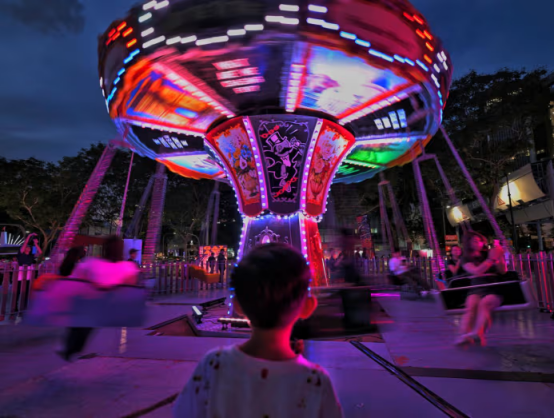
As night falls, the streets of Tokyo’s Shinjuku suddenly illuminate with a sea of neon lights. Mechanical crabs in Osaka’s Dotonbori “wave” their claws in the light. Rainwater on Hong Kong’s Nathan Road reflects interwoven bands of red, green, and white—this is the unique nighttime romance of Asian cities. Neon, a lighting technology born in the West, has taken root in Asia, becoming not only a vehicle for commercial advertising but also a symbol of urban culture, an inspiration for film aesthetics, and even the collective memory of a generation. From the first neon sign in Japan in the 1920s to its continued presence as a core element of Asia’s urban nightscapes today, neon’s century-long history has been deeply woven into the urban fabric of Tokyo, Osaka, and Hong Kong, writing a unique chapter of light and time.
Tokyo: From bakery ads to the rise of the “Neon Capital”
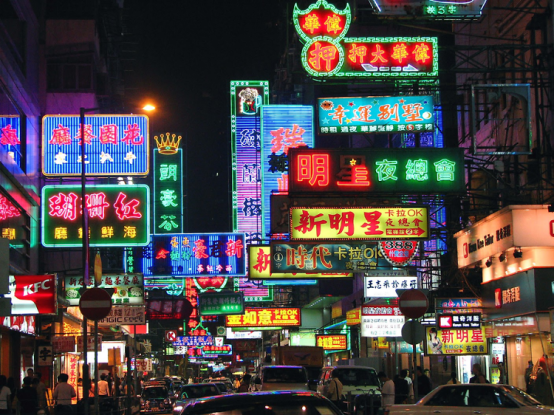
Tokyo is undoubtedly the birthplace of neon in Asia. The city’s relationship with neon began in 1926, when Tokyo Pan Bakery, a bakery in Shinjuku, erected Japan’s first neon sign to attract customers. Back then, neon was still a novelty, its cool, dazzling glow striking at night, quickly inspiring businesses to follow suit. However, Tokyo’s neon boom truly took off after World War II.
At the end of 1957, a “spectacle of light” completely transformed Tokyo’s nightscape: Tokyo Tsushin Kogyo erected a massive neon billboard at Sukiyabashi in Ginza, modeled after New York’s Times Square. As the lights lit up on national television, the company officially announced its name change to “Sony.” This sign not only made the name “Sony” known throughout Japan, but also made Tokyo businesses realize that neon signs weren’t just advertisements; they were a passport for brands to reach the public. From then on, shopping districts like Ginza, Shinjuku, and Shibuya began to be dominated by neon signs of all sizes: from multi-story billboards to tiny brand light boxes in shop windows, businesses competed to attract attention with brighter colors and more unique designs. A “lighting competition” even developed: if your sign outshone mine, mine would be bigger and more dazzling.
By the 1960s, Tokyo’s neon lights had become a defining “streetscape”: entire streets bathed in neon, a vibrant interplay of red, blue, pink, and green, tinging even the night air with color. Areas like Utabuchiko and Ginza became “neon landmarks,” attracting countless tourists who flocked to experience the vibrant energy of this “city that never sleeps.” This scene not only defined Tokyo’s image but also influenced other Japanese cities, including Osaka and Nagoya, to emulate it, making neon a staple of Japanese urban nightlife.
Osaka: Dotonbori’s “Mechanical Neon” and a Century of Memories
If Tokyo’s neon lights win in “density and fashion”, then Osaka’s neon lights win in “individuality and fun”, and the core of all this is Dotonbori.
Dotonbori is Osaka’s “foodie and entertainment paradise.” At night, its neon signs become the center of attention: giant mechanical crabs advertise crab restaurants, rotating sushi models attract diners, and a variety of cartoon-themed signs appear particularly vivid under the lights. The most famous of these is Glico’s “Running Man” sign. This athletic figure, holding a torch and striding, has become an Osaka symbol since its erection in 1935 (some say 1919). Over the past century, the “Running Man” sign has undergone numerous renovations, yet it has always retained its classic design: a blue tracksuit and a red torch, making it particularly eye-catching under the night lights. It’s more than just an advertisement for Glico candy; it’s become Osaka’s cultural icon. During the 2002 World Cup, the “Running Man” sign was decorated with World Cup elements to welcome visitors from around the world. During sporting events, the sign also changes its lighting to match the theme, becoming a symbol of Osaka’s collective memory.
Dotonbori’s neon signs also carry a strong “Osaka atmosphere”: unlike Tokyo’s high-end brands, the signs here are mostly owned by restaurants, snack bars, and arcades, with more down-to-earth, even exaggerated, designs. For example, the crab-themed restaurant’s sign features a multi-story mechanical crab with claws that slowly open and close, and light shines through the cracks in its shell, creating a comical and eye-catching effect. This combination of “mechanical + neon” elevates Osaka’s neon signs to more than just lights; they become interactive installations, imbued with a sense of fun and intimacy. This has made Dotonbori one of Osaka’s most lively nightlife destinations—locals and tourists alike enjoy strolling, dining, and taking photos beneath the neon lights, experiencing this unique “Osaka joy.”
Hong Kong: “Chinese Symbols” in Neon Lights and Film Inspiration
In the 1960s, neon lights crossed the strait, took root in Hong Kong, and gradually developed “Chinese characteristics”.
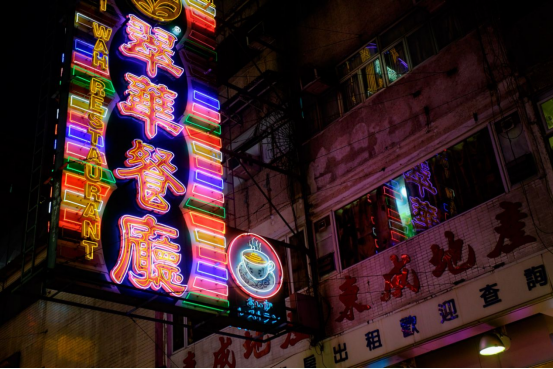
Hong Kong’s neon signs were initially a powerful advertising tool for businesses: Nathan Road, Portland Street, Causeway Bay, and other commercial districts were quickly blanketed in neon signs. Unlike those in Tokyo and Osaka, Hong Kong’s neon signs incorporated numerous traditional Chinese elements, a point highlighted in Christopher DeWolfe’s research. Pawnshop signs often featured a bat holding a coin. In traditional Chinese culture, “bat” (bat) and “blessing” (fu) are homophones, meaning the bat descending from the sky symbolizes “blessings from heaven,” while the coin represents wealth. This combination not only aligns with the pawnshop’s “wealth” attributes but also appeals to the public’s desire for good fortune. Signs often feature red (traditionally auspicious), white, and green. These colors are not only eye-catching but also reflect a Chinese aesthetic: red symbolizes joy, green represents vitality, and white serves as a neutral tone.
Hong Kong’s neon lights are also inextricably linked to film. Neon was almost universally featured in Hong Kong films of the 1980s and 1990s: Chow Yun-fat, gun-wielding, in “A Better Tomorrow”; Tony Leung Chiu-wai, speaking to a bar of soap beneath neon lights in “Chungking Express”; and countless police and gangster films, romances, all set against the backdrop of neon-lit streets. These scenes not only introduced Hong Kong’s neon lights to the world but also inspired director Ridley Scott. The futuristic Los Angeles nightscape in the 1982 film “Blade Runner” was modeled after rainy Hong Kong: the dense neon signs, the reflections of rainwater, and the blend of Eastern and Western elements can all be found on Hong Kong’s streets.
For Hong Kong residents, neon lights are a part of life: young couples stroll beneath them, office workers rush through the neon-lit streets, and tourists snap photos on rain-soaked Nathan Road—these scenes constitute Hong Kong’s “daily nighttime routine.” The neon lights of Portland Street are particularly distinctive: the layers of signs stretch from floor to ceiling, their lights filtering through the rain creating a “cascade of light,” a vibrant and ethereal scene tinged with a hazy romance.
The meaning of neon: more than just advertising, it’s the “soul” of the city
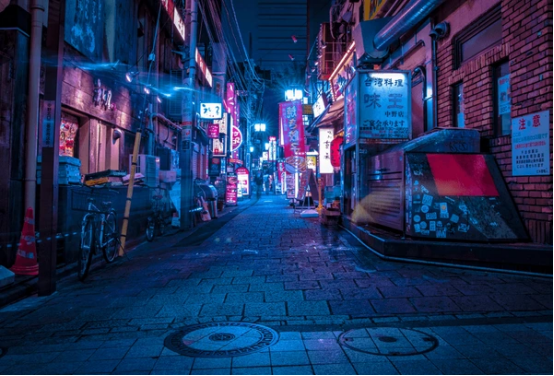
In Asia, neon lights have never been just an advertising medium. For Tokyoites, they symbolize urban vitality—the glow of neon lights at night signifies the city’s never-ending bustle. For Osaka residents, they embody the spirit of everyday life—the neon lights of Dotonbori signify an endless supply of delicious food and endless joy. For Hong Kongers, they symbolize cultural fusion—the combination of Chinese symbols and Western lighting perfectly embodies Hong Kong’s “East meets West” urban identity.
Admittedly, with the popularity of LED lights, some neon signs are gradually being replaced due to their high energy consumption and difficulty in maintenance, and some old signs are disappearing in urban renewal. But for many, neon lights remain “irreplaceable”: their light is softer and more warm, not as glaring as LEDs; their shapes have a more “handmade” feel, with each sign a craftsman’s work, imbued with a unique texture; and most importantly, they carry the memories of the city – seeing the neon lights of Tokyo’s Ginza brings back memories of the “Showa style” of the past; seeing the “Running Man” in Osaka brings back childhood candy; seeing the “Bat Sign” in Hong Kong brings back stories of old pawnshops.
Today, many cities in Asia continue to protect neon lights: Tokyo is renovating old neon signs, Osaka has designated the “Running Man” symbol as a cultural heritage site, and Hong Kong is also working to preserve the classic neon lights of Nathan Road and Portland Street. As everyone knows, these twinkling lights not only illuminate the city’s night sky but also illuminate the memories of generations, making them the most precious “light and shadow heritage” of Asian cities.
Perhaps, future cities will have more advanced lighting technologies, but the romance and warmth of neon will always leave a unique touch of color in the night sky of Asia.