This article is an upgraded and expanded version of content originally published at:
In the annals of human history, few figures loom as large or inspire as profoundly as Mahatma Gandhi. His name is synonymous with nonviolent resistance, a revolutionary philosophy and method that not only liberated India from British colonial rule but also reshaped the global understanding of power, justice, and human dignity. This ultimate guide delves into the essence of Gandhi’s movement, known as Satyagraha, exploring its foundational principles, the pivotal campaigns it fueled, and its enduring legacy that continues to resonate across continents and generations.
From the dusty plains of India to the halls of international diplomacy, Gandhi’s “truth-force” demonstrated that moral courage could triumph over brute force, offering a blueprint for social change that prioritizes peace, empathy, and unwavering commitment to justice. Join us as we uncover the intricate layers of this peaceful revolution, understanding “the why” behind its success and its continued relevance in a world still grappling with conflict and inequality.
The Architect of Peace: Mahatma Gandhi’s Early Life and Philosophy
Mohandas Karamchand Gandhi, born in Porbandar, Gujarat, in 1869, was an unlikely revolutionary. His early life was marked by conventional education and a shy demeanor. However, a pivotal period in South Africa transformed him from a modest lawyer into the Mahatma, or “Great Soul,” a revered leader who would challenge the mightiest empire of his time. It was here, confronting systemic racial discrimination against Indians, that Gandhi began to forge his unique philosophy of resistance.
Formative Years and Influences
Gandhi’s legal practice in South Africa exposed him firsthand to the brutal realities of racial segregation and injustice. His personal experiences, such as being thrown off a train for refusing to move from a first-class compartment, fueled his determination to fight for human rights. During this period, he deeply engaged with various spiritual and philosophical texts. Influences from Leo Tolstoy’s “The Kingdom of God Is Within You,” Henry David Thoreau’s essay “Civil Disobedience,” and John Ruskin’s “Unto This Last” profoundly shaped his worldview. These works championed ideas of non-resistance to evil, the moral imperative of non-cooperation with unjust laws, and the dignity of labor, respectively. These intellectual seeds, combined with his Hindu upbringing emphasizing Ahimsa (non-violence), began to coalesce into a coherent strategy for social and political change.
The Genesis of Satyagraha: Truth-Force
The term ‘Satyagraha’ itself was coined by Gandhi in South Africa, a compound of two Sanskrit words: ‘Satya’ (truth) and ‘Agraha’ (firmness or insistence). It translates to “truth-force” or “soul-force.” Unlike passive resistance, which Gandhi viewed as a tactic of the weak, Satyagraha was an active, morally assertive, and courageous form of resistance. It was rooted in the belief that truth would ultimately prevail and that an appeal to the conscience of the oppressor, through self-suffering and non-violent means, could bring about a change of heart. This wasn’t merely about refusing to cooperate; it was about actively seeking justice through ethical means, even when faced with violence.
Satyagraha: The Power of Truth-Force in Action
Satyagraha was more than a political strategy; it was a way of life, a moral imperative that demanded immense discipline and courage from its adherents. Gandhi meticulously articulated its core principles, which served as the bedrock for all his campaigns, both in South Africa and later in India. Understanding these principles is crucial to grasping the profound impact of his movement.
Core Principles of Nonviolent Resistance
The efficacy of Satyagraha lay in its unwavering adherence to several key tenets:
- Ahimsa (Non-violence): This was the supreme principle, extending beyond physical harm to include mental and emotional violence. Satyagrahis were committed to never retaliate, even under extreme provocation, believing that violence only begets more violence.
- Truth (Satya): Gandhi believed that the pursuit of truth was the ultimate goal. Satyagraha was about holding onto truth, exposing injustice, and seeking reconciliation based on truth, not coercion.
- Tapasya (Self-suffering): A critical element, self-suffering was seen as a way to appeal to the conscience of the oppressor and purify the resister. By willingly enduring pain and hardship without retaliation, the Satyagrahi demonstrated the depth of their conviction and the injustice of the oppressor’s actions.
- Fearlessness: Satyagraha demanded immense courage, not merely in facing physical danger but also in confronting deeply entrenched social norms and political power structures. Fear was seen as an impediment to truth.
- Non-Cooperation: This involved boycotting institutions, refusing to obey unjust laws, and withdrawing support from the oppressive system, but always in a non-violent manner.
The Strategic “Why” Behind Non-Violence
Gandhi’s choice of non-violence was not merely an ethical one; it was also a deeply strategic decision. He understood that India, a vast and diverse nation, could not defeat the technologically superior British Empire through armed rebellion. Instead, non-violence offered several distinct advantages:
- Moral High Ground: It stripped the oppressor of moral legitimacy and garnered international sympathy for the Indian cause, making it difficult for the British to justify their brutal repression.
- Mass Mobilization: Non-violence allowed for the participation of women, the elderly, and those who could not engage in armed struggle, creating a broad-based movement that transcended social strata.
- Sustainability: Unlike violent uprisings that often lead to cycles of revenge, non-violent resistance aimed for reconciliation and a constructive future. It avoided the destruction of infrastructure and human life, preserving the social fabric.
- Psychological Impact: The unwavering commitment of Satyagrahis, even in the face of violence, often bewildered and demoralized the British authorities and their soldiers, creating internal dissent within the colonial administration.
Key Campaigns That Forged India’s Destiny
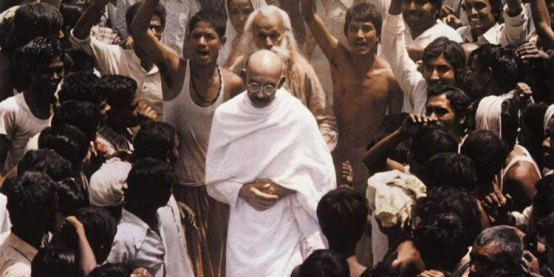
Upon his return to India in 1915, Gandhi quickly rose to prominence, applying his Satyagraha principles to various local grievances before leading nationwide movements that ultimately paved the way for India’s independence. These campaigns were meticulously planned, strategically executed, and demonstrated the practical power of nonviolent action.
The Non-Cooperation Movement (1920-1922)
Following the horrific Jallianwala Bagh massacre in 1919 and the disillusionment over British promises, Gandhi launched the Non-Cooperation Movement. The goal was to withdraw Indian support from British institutions, including government offices, courts, schools, and legislative councils, and to boycott foreign goods. The movement saw widespread participation, with thousands resigning from government jobs, children leaving British schools, and lawyers boycotting courts. It effectively demonstrated the extent of Indian discontent and the potential for mass mobilization. However, it was abruptly called off by Gandhi after the Chauri Chaura incident, where protestors turned violent and set fire to a police station, killing several policemen. This highlighted Gandhi’s strict adherence to non-violence, even at the cost of perceived momentum, and his recognition of the pitfalls of uncontrolled mass action.
The Iconic Salt March (1930)
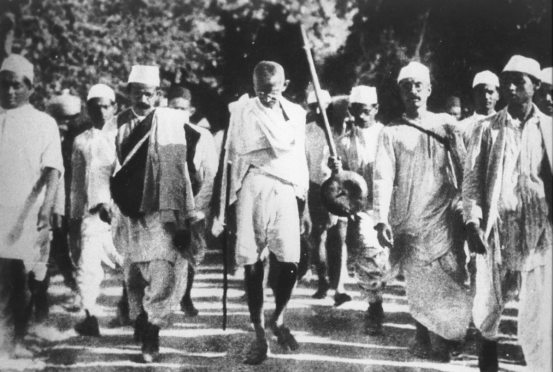
Perhaps the most symbolic and globally recognized act of civil disobedience was the Salt March. The British salt tax was a deeply unpopular and unjust levy that affected the poorest Indians most severely. In March 1930, Gandhi, along with 78 followers, embarked on a 240-mile trek from his ashram to the coastal village of Dandi. The act of making salt from seawater in defiance of the British monopoly was a simple yet powerful symbol of self-reliance and resistance against colonial exploitation. The march captured international headlines, inspiring millions to join in similar acts of civil disobedience across India. The British responded with mass arrests, including Gandhi himself, but the movement had already ignited the nation’s resolve and severely damaged the moral standing of the British Empire.
The Quit India Movement (1942)
With the onset of World War II, Britain sought India’s full support, promising future reforms but not immediate independence. Gandhi, sensing a critical moment, launched the “Quit India” movement, demanding an immediate end to British rule. His stirring call of “Do or Die” resonated deeply with the masses. The movement led to widespread civil unrest, sabotage of British infrastructure, and mass arrests of Indian leaders. While the British suppressed the movement with force and detained Gandhi for two years, it signaled unequivocally that India would no longer tolerate colonial rule. The movement, though suppressed, significantly weakened British authority and bolstered the momentum for India’s eventual independence post-WWII.
Gandhi’s Enduring Global Legacy and Modern Relevance
India finally achieved independence in 1947, a testament to the power of the nonviolent struggle. However, this triumph was marred by the tragic partition of India and Pakistan, leading to widespread communal violence—a development that deeply grieved Gandhi. Despite these challenges, his philosophy and methods have transcended geographical and temporal boundaries, influencing countless movements for justice and freedom worldwide.
Influence on Civil Rights Leaders
Gandhi’s influence on subsequent generations of civil rights and liberation leaders is undeniable. Martin Luther King Jr., the iconic leader of the American Civil Rights Movement, openly acknowledged Gandhi as his primary inspiration, adopting nonviolent civil disobedience as the cornerstone of his fight against racial segregation. Nelson Mandela, while eventually resorting to armed struggle against apartheid in South Africa, initially embraced and later returned to principles of non-violence, deeply valuing Gandhi’s teachings. Other figures, from Lech Walesa in Poland to Aung San Suu Kyi in Myanmar, have drawn strength and strategic insight from the Gandhian model, demonstrating its universal applicability.
Challenges and Criticisms of Nonviolent Resistance
While celebrated, Gandhi’s approach and its outcomes have also faced scrutiny. Critics argue that nonviolent resistance can be slow, demanding immense patience and sacrifice, and may not always be effective against truly ruthless regimes. The partition of India, despite Gandhi’s best efforts, stands as a stark reminder of the complexities and limitations, where communal violence erupted on an unprecedented scale. Some historians also debate whether British economic weakening post-WWII and other geopolitical factors were as crucial, if not more, than nonviolent resistance in securing India’s independence. Furthermore, Gandhi’s views on certain social issues and his economic philosophy have also been subject to modern critique.
Pro Tips: Applying Satyagraha Principles Today
The principles of Satyagraha are not confined to historical movements but offer powerful tools for contemporary activism and conflict resolution. Here’s how they can be applied:
- Identify the Injustice Clearly: Before action, thoroughly understand
Editorial context note: This article is educational history, culture, politics, religion, or travel commentary. It is not official guidance, professional advice, legal advice, security advice, diplomatic analysis, travel-safety guidance, medical advice, religious authority, or a final account of contested events. Readers should compare current primary sources and publication dates for time-sensitive topics.Political and geopolitical note: References to governments, leaders, elections, conflicts, national policy, colonialism, sanctions, state power, or geopolitical disputes are informational and non-partisan. They do not represent an official position, endorsement, campaign message, legal advice, investment advice, security guidance, or real-time intelligence.