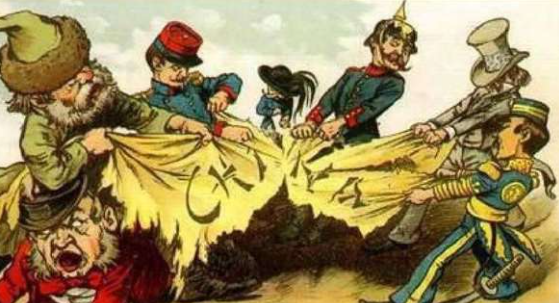
The trajectory of European history is not a linear progression but a series of seismic shifts triggered by religious fervor, biological catastrophe, and insatiable economic ambition. To understand the modern geopolitical landscape, one must dissect the layers of the past—starting from the medieval clash of civilizations to the revolutionary fires that sought to redefine the relationship between the state and the individual. This pillar page synthesizes the core drivers of European evolution, providing an in-depth look at the mechanisms of power that reshaped the globe.
The Religious and Geopolitical Foundations of the Crusades
The Crusades represent one of the most complex intersections of spiritual devotion and cold, calculated geopolitics in human history. While often framed as a purely religious endeavor to reclaim the Holy Land, the underlying mechanics were deeply rooted in the power struggles of the 11th century. The Byzantine Empire, facing existential threats from the Seljuk Turks, sought assistance from the West, providing the Papacy with a unique opportunity to assert its supremacy over secular monarchs and the Eastern Orthodox Church.
The Convergence of Faith and Ambition
The mobilization of thousands of knights and peasants was fueled by the promise of indulgences—the remission of sins—but the logistical reality required the cooperation of Italian maritime republics like Venice and Genoa. These city-states viewed the Crusades as a means to dismantle Byzantine trade monopolies and establish their own commercial outposts in the Levant. This dual-track motivation created a “crusader state” system that was as much about feudal land-grabbing as it was about religious pilgrimage.
- The Byzantine Catalyst: The appeal from Emperor Alexios I Komnenos provided the legal and moral pretext for Pope Urban II’s sermon at the Council of Clermont.
- Economic Expansion: The establishment of the Latin East opened new trade routes for silk, spices, and precious stones, fundamentally altering the European economy.
- Cultural Synthesis: Despite the violence, the contact between the Islamic world and Europe led to the transfer of advanced mathematics, medicine, and Aristotelian philosophy back to the West.

The Black Death: A Biological Catalyst for Political Transformation
In the mid-14th century, the Yersinia pestis bacterium achieved what no invading army could: the total destabilization of the European social order. The Black Death was not merely a health crisis; it was a political and economic reset. By eliminating between 30% and 60% of the population, the plague shattered the foundations of manorialism and the feudal hierarchy that had dominated Europe for centuries.
The Collapse of the Feudal Contract
Before the plague, Europe was characterized by an oversupply of labor and a scarcity of land, keeping the peasantry in a state of perpetual servitude. The massive mortality rate reversed this dynamic overnight. Surviving peasants found themselves in a position of unprecedented leverage. When lords attempted to enforce traditional labor services, the result was a series of violent uprisings, such as the Peasants’ Revolt of 1381 in England.
| Feature | Pre-Plague (1300s) | Post-Plague (1400s) |
|---|---|---|
| Labor Market | Oversupply; low wages | Extreme shortage; high wages |
| Land Value | High; concentrated in nobility | Low; many estates abandoned |
| Social Mobility | Strictly hierarchical; static | Increased; rise of the middle class |
| Church Authority | Absolute and unquestioned | Weakened by inability to stop plague |
The long-term political consequence was the centralization of power. As the nobility lost their economic grip on the peasantry, they became more dependent on royal courts, paving the way for the rise of absolute monarchies. Furthermore, the Church’s failure to provide spiritual protection against the pestilence sowed the early seeds of skepticism that would eventually bloom into the Reformation.

The Age of Colonialism: The Global Quest for Spices and Gold
As Europe recovered from the plague and internal conflicts, its gaze turned outward. The “Scramble for Colonies” was driven by the economic philosophy of mercantilism, which posited that the world’s wealth was finite and that a nation’s power was directly proportional to its gold and silver reserves. This zero-sum game transformed the oceans into battlegrounds for the Great Powers.
The Mechanism of Imperial Expansion
The initial impetus was the disruption of overland trade routes to Asia by the Ottoman Empire. This forced European powers to seek maritime alternatives. Portugal and Spain led the charge, utilizing the “Caravel”—a ship capable of windward sailing—to reach the Indian Ocean and the Americas. What began as a search for pepper and cloves quickly evolved into a global system of extraction and exploitation.
The transition from “Spices to Gold” represented a shift in colonial strategy. While the Portuguese focused on a “Trading Post Empire,” the Spanish pursued a “Settlement Empire,” extracting vast quantities of bullion from the Potosí mines. This influx of wealth triggered the Price Revolution in Europe, a period of high inflation that further eroded the old feudal structures and empowered the merchant class.
The Strategic Rivalry of Great Powers
- Britain and France: Their rivalry was defined by the “Second Hundred Years’ War,” fought across the Americas and India to control lucrative sugar and tobacco markets.
- The Dutch East India Company (VOC): The first multinational corporation, which used private military force to secure a monopoly on the spice trade in Indonesia.
- The Atlantic Triangle: The horrific integration of the slave trade into the colonial economic model, linking Europe, Africa, and the Americas in a cycle of production and consumption.

The 19th Century Unification and the Rise of Modern City-States
The 19th century was the era of nationalism, where the fragmented territories of the past were forged into modern nation-states. This process was most visible in the unification of Italy and Germany, where historical cities became the focal points of a new identity. The “tale of two cities” often refers to the symbolic roles of Rome and Berlin in anchoring these new national consciousnesses.
The Logic of National Consolidation
Unification was not merely a romantic ideal but a pragmatic response to the industrial revolution. For a nation to compete in the global market, it required a unified internal market, a standardized legal code, and a centralized infrastructure. Figures like Camillo Benso, Count of Cavour in Italy and Otto von Bismarck in Germany utilized “Realpolitik”—a system of politics based on practical rather than moral or ideological considerations—to achieve these ends.
The process often involved displacing old imperial influences, such as the Austrian Empire’s grip on the Italian peninsula. The unification of these regions changed the balance of power in Europe, creating a “German Giant” in the center of the continent that would dominate European diplomacy until the outbreak of World War I.

The 1848 Revolutionary Wave and Global Diplomatic Responses
Known as the “Springtime of Nations,” the revolutions of 1848 were a series of political upheavals throughout Europe. From Paris to Vienna, the masses rose up against autocratic rule, demanding constitutional government, freedom of the press, and national self-determination. It was the first truly global revolutionary wave, yet its outcomes were paradoxically conservative.
The American Dilemma: Support vs. Distance
An intriguing aspect of 1848 was the reaction of the United States. While the American public and many politicians vocally supported the European “freedom fighters,” the U.S. government maintained a strict policy of non-intervention. This was not due to a lack of sympathy but a calculated adherence to the Monroe Doctrine and Washington’s Farewell Address.
The United States feared that if they intervened in European internal affairs, European powers would feel justified in intervening in American affairs, particularly regarding the contentious issue of slavery and westward expansion. This “distance” allowed the U.S. to grow its own power base while the European powers were distracted by internal instability.
Why the Revolutions Faltered
- Internal Divisions: The revolutionaries were a fragile coalition of middle-class liberals and radical working-class socialists whose goals eventually diverged.
- Military Loyalty: In most cases, the professional armies remained loyal to the monarchs, allowing the old guard to regroup and suppress the uprisings.
- The Rise of Louis-Napoleon: In France, the revolution ended with the election of Louis-Napoleon Bonaparte, who eventually declared himself Emperor, illustrating the “circular” nature of many 1848 movements.
Frequently Asked Questions (FAQ)
- Q1: How did the Black Death contribute to the rise of capitalism?
- By creating a labor shortage, the Black Death forced landowners to compete for workers by offering higher wages and better conditions. This helped dissolve the feudal system of “land for service” and replaced it with a wage-based economy. The resulting increase in disposable income among the lower classes stimulated trade and the growth of urban markets, which are the fundamental building blocks of capitalism.
- Q2: What was the primary difference between the Crusades and later Colonialism?
- While both involved expansion into foreign territories, the Crusades were primarily driven by a combination of religious ideology and feudal land acquisition within a Mediterranean context. In contrast, later Colonialism was driven by mercantilist economic theory, global maritime trade routes, and the systematic extraction of resources (like silver and sugar) to fuel the treasuries of emerging nation-states.
- Q3: Why is 1848 called the “Springtime of Nations”?
- The term refers to the sudden and widespread emergence of nationalist movements across Europe. Ethnic groups that had been suppressed within large empires (like the Austrians, Hungarians, and Italians) began to demand their own sovereign states. Although many of these movements failed in the short term, they set the stage for the eventual unification of Italy and Germany later in the century.
- Q4: How did the Crusades impact European technology?
- The Crusades acted as a massive cultural exchange. Europeans were exposed to superior Islamic advancements in optics, medicine, and mathematics (including the concept of zero). They also brought back technologies like the windmill and improved techniques for making paper and glass, which were essential for the later Renaissance and Scientific Revolution.
- Q5: Why did the US support European freedom but refuse to help in 1848?
- The U.S. government followed a policy of “Isolationism” regarding European conflicts. While they ideologically supported republicanism, they were wary of the “entangling alliances” mentioned by George Washington. Furthermore, the U.S. was preoccupied with its own internal tensions and the Mexican-American War, making an overseas military entanglement politically impossible.