The Enlightenment: An Ultimate Guide to the Age of Reason
The Enlightenment, often called the “Age of Reason,” was a transformative intellectual and cultural movement that swept across Europe in the 17th and 18th centuries. It was not a single, unified event but a powerful wave of new ideas that challenged centuries of tradition, superstition, and absolute authority. At its heart, the Enlightenment championed reason as the primary source of knowledge and advocated for ideals such as liberty, progress, tolerance, and the separation of church and state. This guide delves into the core principles of this pivotal era, introduces its most influential thinkers, and explores its profound and lasting impact on the world we live in today.
The Core Principles of Enlightenment Thought
The Enlightenment was built upon a foundation of several revolutionary principles that fundamentally shifted how people viewed humanity, society, and the universe. These ideas were a direct challenge to the established order of monarchies and the church.
The Primacy of Reason and Empiricism
Before the Enlightenment, knowledge was often derived from religious dogma and ancient texts. Enlightenment thinkers, inspired by the Scientific Revolution, argued that truth should be discovered through logic, reason, and direct observation (empiricism). This meant that any idea, no matter how sacred, could be questioned and tested. This principle laid the groundwork for the modern scientific method.
Individualism and Natural Rights
A radical concept at the time, individualism proposed that the individual, not the state or the church, was the starting point for all political and social understanding. Thinkers like John Locke argued that every person is born with inherent “natural rights,” including life, liberty, and property. This was a direct refutation of the “divine right of kings,” which held that a monarch’s authority was granted by God.
Skepticism Towards Authority
Enlightenment philosophy encouraged a healthy skepticism of all forms of authority, whether political or religious. Thinkers like Voltaire famously criticized the intolerance and corruption of the organized church and absolute monarchies. This critical spirit fostered an environment where open debate and the questioning of power became central to societal progress.

Key Enlightenment Thinkers and Their Groundbreaking Ideas
The Enlightenment was defined by a group of brilliant writers, philosophers, and scientists known as “philosophes.” Their ideas were discussed in salons, published in pamphlets, and spread across continents, fueling revolutionary change.
John Locke (1632-1704): The Architect of Liberalism
Often considered the father of liberalism, English philosopher John Locke posited that government is a “social contract” between the rulers and the ruled. He argued that governments are formed to protect the natural rights of citizens, and if a government fails to do so, the people have the right to overthrow it. His ideas directly influenced the American Declaration of Independence.
Baron de Montesquieu (1689-1755): The Champion of Separation of Powers
In his work “The Spirit of the Laws,” Montesquieu analyzed different forms of government. To prevent tyranny and protect liberty, he advocated for the separation of governmental powers into three branches: the legislative, the executive, and the judicial. This model of checks and balances became a cornerstone of the United States Constitution.
Voltaire (1694-1778): The Advocate for Free Speech
A prolific French writer and satirist, Voltaire was a fierce defender of freedom of speech, freedom of religion, and the separation of church and state. His famous (though likely apocryphal) quote, “I disapprove of what you say, but I will defend to the death your right to say it,” perfectly encapsulates his unwavering belief in civil liberties.
Jean-Jacques Rousseau (1712-1778): The Proponent of Popular Sovereignty
Rousseau’s concept of the “general will” argued that the true source of political power is the collective will of the people (popular sovereignty). In his “The Social Contract,” he famously wrote, “Man is born free, and everywhere he is in chains.” He believed that a just society is one where citizens willingly subordinate their individual interests to the common good.
Comparing the Titans of Reason: A Thinker’s Checklist
Understanding the nuances between the major Enlightenment thinkers is key to grasping the movement’s breadth. The following table compares their core contributions to political and social thought.
| Thinker | Core Idea | Major Work | Lasting Impact |
|---|---|---|---|
| John Locke | Natural Rights (Life, Liberty, Property) & Social Contract | Two Treatises of Government | Foundation for the American Declaration of Independence |
| Montesquieu | Separation of Powers (Legislative, Executive, Judicial) | The Spirit of the Laws | Framework for the U.S. Constitution and modern democracies |
| Voltaire | Freedom of Speech, Religion, and Expression | Candide | Influenced the U.S. First Amendment and bills of rights globally |
| Rousseau | Popular Sovereignty & The General Will | The Social Contract | Intellectual basis for the French Revolution and participatory democracy |
The Revolutionary Impact and Enduring Legacy of the Enlightenment
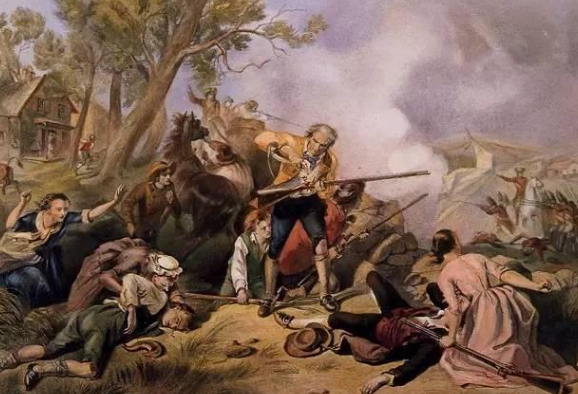
The ideas of the Enlightenment were not merely academic; they were explosive, inspiring revolutions that toppled monarchies and reshaped the globe. The American Revolution (1775-1783) and the French Revolution (1789-1799) were direct applications of Enlightenment principles, fighting for liberty, equality, and representative government.
Foundations of Modern Democracy
Nearly every modern democracy owes an intellectual debt to the Enlightenment. Concepts like constitutional government, human rights, civil liberties, and the rule of law all have their roots in this period.
The Rise of Secularism and Science
By championing reason over dogma, the Enlightenment fostered the growth of secularism, the idea that government and other public institutions should be separate from religious influence. It also cemented the scientific method as the primary tool for understanding the natural world, paving the way for centuries of technological and medical advancement.
Expert Advice: Applying Enlightenment Principles Today
The wisdom of the Enlightenment remains incredibly relevant. To apply its principles in modern life, focus on these three practices:
- Cultivate Critical Thinking: Do not accept information passively. Question sources, evaluate evidence, and form your own reasoned conclusions. This is the cornerstone of challenging misinformation and dogma.
- Engage in Civil Discourse: Embrace the spirit of the salon by engaging in respectful debate. Defend the right of others to express differing opinions, as Voltaire championed, to foster a marketplace of ideas.
- Uphold Your Civic Duty: Understand that you are part of a social contract. Stay informed about political issues, vote in elections, and hold your elected officials accountable to protect the rights and serve the general will of the people.
Frequently Asked Questions (FAQ)
-
Was the Enlightenment only a European movement?
- While the Enlightenment’s origins are rooted in 17th and 18th-century Europe, its ideas quickly spread globally. Thinkers in the American colonies, such as Thomas Jefferson and Benjamin Franklin, were central figures. The principles of the Enlightenment later inspired independence movements in Latin America and reform movements across the world.
-
What was the relationship between the Enlightenment and the Scientific Revolution?
- The Scientific Revolution (c. 1543-1687) was the direct precursor to the Enlightenment. Scientists like Isaac Newton demonstrated that the universe operated according to predictable, natural laws that could be discovered through observation and reason. Enlightenment philosophers sought to apply this same scientific approach to human society, government, and morality.
-
Did everyone support the Enlightenment?
- No. The Enlightenment faced significant opposition. Monarchies and the established church saw it as a direct threat to their power and authority. Additionally, the late 18th century saw the rise of the Romanticism movement, which was a reaction against the Enlightenment’s focus on reason. Romantics prioritized emotion, intuition, and nature over the cold logic they associated with the philosophes.
-
How did the Enlightenment affect economics?
- The Enlightenment had a profound impact on economic theory. Adam Smith, a Scottish philosopher, applied Enlightenment principles of natural law and individual liberty to economics in his book “The Wealth of Nations.” He argued for free markets (laissez-faire) and believed that an “invisible hand” would guide a rational, self-interested economy toward prosperity, laying the foundation for modern capitalism.