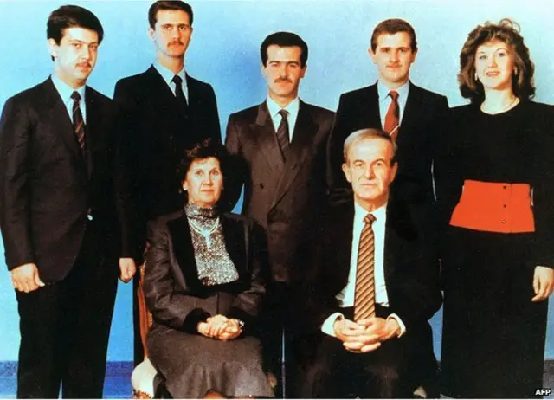
The history of modern Syria is inextricably linked to the Assad family, a dynasty that shaped the Middle East for over half a century. From the 1970 “Corrective Movement” to the dramatic events of December 2024, the Assads maintained a grip on power through a combination of strategic alliances, ruthless internal security, and a complex web of sectarian loyalty. Understanding this period requires a deep dive into the transition from Hafez al-Assad’s pragmatic authoritarianism to Bashar al-Assad’s era of civil war and ultimate downfall.
The Foundation of Power: Hafez al-Assad’s Strategic Rise
Hafez al-Assad, a former Air Force pilot and member of the Ba’ath Party, seized power in 1970. Unlike previous leaders who faced frequent coups, Hafez engineered a “coup-proof” state by placing loyalists, predominantly from his own Alawite minority, in key military and intelligence positions. This sectarian strategy ensured that the survival of the regime was tied directly to the survival of the Alawite community.
The Corrective Movement and State Building
The “Corrective Movement” was not just a political shift; it was a total restructuring of the Syrian state. Hafez focused on building a massive bureaucracy and a formidable military. He positioned Syria as a central player in Arab-Israeli relations, using regional leverage to maintain domestic stability. His rule was characterized by the “Hama Rules”—a term coined by Thomas Friedman after the 1982 massacre—symbolizing the absolute use of force to eliminate domestic opposition.
| Key Event | Year | Impact on Regime |
|---|---|---|
| Corrective Movement | 1970 | Hafez al-Assad takes absolute control. |
| Yom Kippur War | 1973 | Solidifies Hafez’s status as an Arab leader. |
| Hama Massacre | 1982 | Crushes the Muslim Brotherhood opposition. |
| Death of Hafez | 2000 | Leads to the first hereditary succession in a republic. |

The Bashar al-Assad Era: From Reformist to Pariah
When Bashar al-Assad took office in 2000, there was global hope for the “Damascus Spring.” An ophthalmologist trained in London, Bashar was seen as a modernizer. However, the initial opening of political discourse was quickly shut down as the old guard and the security apparatus reasserted control. The transition from a closed economy to a crony-capitalist model further marginalized the rural population, setting the stage for future unrest.
The 2011 Uprising and the Descent into War
The Arab Spring reached Syria in March 2011. What began as peaceful protests for dignity and reform was met with extreme violence by the state. Bashar’s decision to use the military against civilians transformed a domestic protest movement into a multi-sided civil war. Over the next decade, the regime became increasingly dependent on foreign intervention, specifically from Russia, Iran, and Hezbollah, to maintain control over a fractured territory.
- Economic Mismanagement: The shift toward a market economy benefited a small circle of elites (the “shabiha” and businessmen like Rami Makhlouf).
- Sectarian Polarization: The regime framed the conflict as a war against “terrorists” to keep minority groups fearful and loyal.
- International Isolation: Syria was suspended from the Arab League and faced crippling sanctions.
The Mechanics of Control: The Mukhabarat State
The Assad dynasty relied on the “Mukhabarat”—a network of multiple intelligence agencies that monitored every aspect of Syrian life. By creating overlapping jurisdictions, the regime ensured that no single general or agency could become powerful enough to launch a coup. This culture of fear was the primary tool for maintaining order for over five decades.
Expert Insight: The Coup-Proofing Doctrine
Political scientists often point to Syria as the ultimate example of “coup-proofing.” By ensuring that the elite Fourth Armored Division and the Republican Guard were commanded by family members (like Rifaat al-Assad in the past and Maher al-Assad recently), the regime ensured that the most well-equipped units would never turn on the presidency. However, this reliance on family and sect ultimately created a rigid system that could not adapt to the shifting geopolitical realities of 2024.

The Decisive Collapse: December 2024
The end of the Assad dynasty came with surprising speed in December 2024. As Russia became bogged down in its own conflicts and Iran’s regional influence faced new challenges, the Syrian opposition launched a lightning offensive. The fall of Aleppo, followed quickly by Hama and Homs, signaled the total breakdown of the regime’s military morale. On December 8, 2024, the 54-year rule officially ended as rebel forces entered Damascus.
Factors Leading to the Final Fall
The collapse was not the result of a single battle but the culmination of years of rot. The state had become a “narco-state,” heavily involved in the production of Captagon to fund its operations. This alienated regional neighbors and further destroyed the social fabric of the country. When the final push came, the hollowed-out institutions of the Assad state simply evaporated, leading to the family’s flight from the country.
Frequently Asked Questions (FAQ)
- How long did the Assad family rule Syria?
- The Assad family ruled Syria for a total of 54 years, beginning with Hafez al-Assad’s rise in 1970 and ending with the fall of Bashar al-Assad in December 2024.
- What was the primary cause of the regime’s collapse in 2024?
- The collapse was caused by a combination of military exhaustion, the withdrawal of effective Russian and Iranian support, and a lightning offensive by opposition forces that exposed the hollowness of the regime’s security forces.
- Who were the main supporters of the Assad regime during the civil war?
- The regime primarily relied on military support from Russia and Iran, as well as proxy forces like Hezbollah. Domestically, it relied on the Alawite-dominated security apparatus.
- What is the “Corrective Movement”?
- The Corrective Movement was the 1970 internal coup within the Ba’ath Party led by Hafez al-Assad, which ousted the more radical elements of the party and established his long-term personal rule.
- What happened to Bashar al-Assad after the fall of Damascus?
- Following the entry of opposition forces into Damascus in December 2024, Bashar al-Assad fled the country, marking the definitive end of the dynasty’s control over the Syrian state.