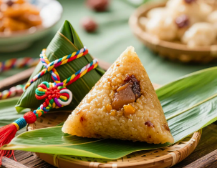
The Dragon Boat Festival is one of the eight traditional festivals in China, usually held from late May to mid-June. This festival has a history of more than 2,000 years and combines many cultural elements such as worship, exorcism, and blessing. In 2009, it became the first Chinese festival to be included in the World Intangible Cultural Heritage.
The Origin of the Dragon Boat Festival
The most popular saying is that the Dragon Boat Festival is to commemorate the Warring States poet Qu Yuan. In 278 BC, the Qin army conquered the capital of Chu. Seeing his country fall, Qu Yuan was filled with grief and despair. On the fifth day of the fifth lunar month, he jumped into the Miluo River and committed suicide.
When local people heard the news, they rowed boats to the river to look for his body and threw rice balls into the water, fearing that the fish and shrimp in the river would bite his body. Later, these practices gradually became the customs of dragon boat racing and eating rice dumplings.
In fact, there are many theories about the origin of the Dragon Boat Festival. In addition to the most familiar version of commemorating Qu Yuan, there is another theory that it is related to the “dragon”. In the past, people in the coastal areas of southern China regarded dragons as their patron saints. Every year on the fifth day of the fifth lunar month, they would hold a grand dragon worship ceremony, hoping that God would bless them with a good harvest and a peaceful life. Later, the cultures of different places gradually merged, and the story of commemorating Qu Yuan and these ancient sacrificial customs were combined to form the current Dragon Boat Festival.
What do people do during the Dragon Boat Festival ?
Eat Zongzi
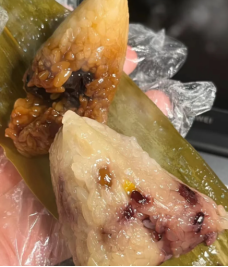
Zongzi is the most representative traditional food of the Dragon Boat Festival. It is made of glutinous rice wrapped with various fillings, then wrapped in bamboo leaves or reed leaves into triangles, quadrilaterals and other shapes, and then steamed. There are rich and varied fillings. In the south, salted egg yolks and pork belly are common, with a strong salty and fragrant taste; in the north, red dates and red bean paste are mostly used, with a sweet and sticky taste.
Dragon Boat Race
Dragon boat racing is an important custom of the Dragon Boat Festival, especially popular in the southern water towns. During the race, dozens of people sit on the dragon boats and paddle hard to the beat of the drums. The audience on the shore cheers and the scene is very lively.
In fact, the earliest purpose of dragon boat racing was to salvage Qu Yuan’s remains from the river. Later, it gradually became a competition, symbolizing the spirit of unity, cooperation, and striving for the best, and it also expresses people’s wishes for health and peace .
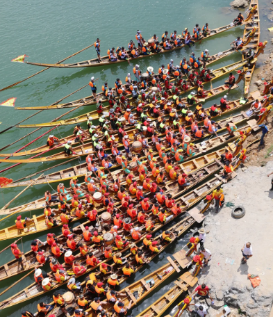
Dragon Boat Race
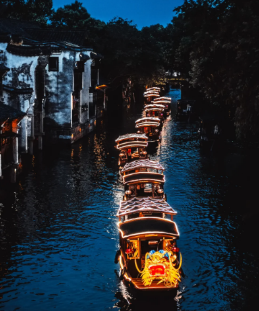
Dragon Boat Lantern Boat
Hanging mugwort and calamus


On the Dragon Boat Festival, many Chinese families hang mugwort and calamus at their doors. Both mugwort and calamus have the effect of repelling insects and killing bacteria. The ancients believed that they could ward off evil spirits and keep the family safe and healthy. From a scientific point of view, in the summer when mosquitoes breed and diseases are prevalent, the smell of mugwort and calamus can indeed purify the air and prevent diseases.
The influence of the Dragon Boat Festival in modern times
The Dragon Boat Festival still maintains strong vitality. In addition to traditional customs, various cultural activities are held in various parts of China, such as Dragon Boat Festival cultural exhibitions and folk performances, so that the younger generation can better understand the meaning of the festival. At the same time, the influence of the Dragon Boat Festival has gradually spread abroad. In Asian countries such as Japan, South Korea, and Vietnam, there are festival customs related to the Dragon Boat Festival.