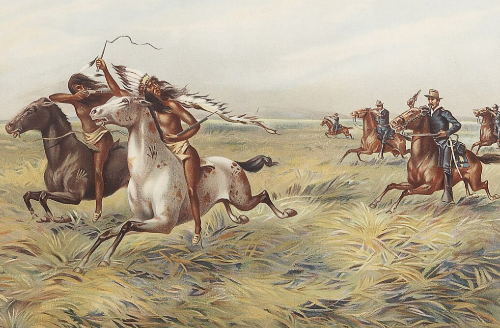
The Economic and Political Dynamics of Frontier Expansion
The history of colonial expansion is fundamentally rooted in the pursuit of resource extraction and territorial sovereignty. In the context of the American Indian Wars, the frontier was not merely a geographic boundary but a contested economic zone. Empires utilized the narrative of ‘manifest destiny’ to justify the displacement of indigenous populations, framing the acquisition of land as an inevitable byproduct of civilizational progress.
Resource Extraction as a Driver of Conflict
Colonial powers prioritized the exploitation of raw materials—timber, minerals, and fertile soil—over the preservation of indigenous land-use systems. This economic imperative necessitated the creation of legal and military frameworks designed to facilitate land transfer.
- The Commodity Pipeline: Colonial entities established trade networks that incentivized the destruction of local ecosystems to maximize exportable goods.
- Military-Industrial Symbiosis: Frontier conflicts were often funded by private interests that stood to profit from the expansion of protected shipping lanes and secure mining territories.

Legislative Oppression and the Jim Crow Framework
Beyond physical borders, colonial and post-colonial regimes utilized legislative structures to enforce racial and social hierarchies. The Jim Crow codes represent a pinnacle of institutionalized inequality, where law was weaponized to strip specific populations of their autonomy and mobility.
The Mechanics of Legalized Subjugation
Laws were drafted with ambiguous language to ensure that enforcement could be selective and punitive. This created an environment where the state could effectively criminalize the existence of marginalized groups.
- Vagrancy Laws: Used to force individuals into involuntary labor under the guise of public order.
- Segregationist Statutes: Designed to prevent the accumulation of generational wealth and social capital by limiting access to education and housing.

From Rebellion to Independence: The Anatomy of Colonial Revolts
Resistance to colonial rule was rarely a singular event; it was a cumulative process of tactical defiance. History is marked by numerous, often overlooked, revolts that challenged the perceived omnipotence of imperial centers.
Strategic Resistance Patterns
Successful revolts often relied on the intersection of local traditional knowledge and an understanding of the colonial administrative weaknesses. These uprisings exposed the fragility of empires that relied on overstretched supply lines and limited local support.
| Revolt Type | Strategic Focus | Outcome Variable |
|---|---|---|
| Economic Sabotage | Disrupting trade routes | Immediate fiscal impact |
| Ideological Insurgency | Challenging the ‘Civilizing Mission’ | Long-term cultural shift |

Cracks on the Map: The Legacy of Arbitrary Borders
The partitioning of territories—most notably during the Scramble for Africa—ignored pre-existing ethnic, linguistic, and cultural boundaries. This cartographic arrogance resulted in states that were inherently unstable, leading to a century of internal and cross-border conflict.
The Geopolitical Consequence of Colonial Mapping
By forcing disparate groups into single administrative units, colonial powers ensured that post-colonial governments would be mired in internal power struggles, preventing the formation of unified national identities.

The Hypocritical Mask of the Civilizing Mission
Education was frequently presented as a humanitarian gift to the colonized. However, the reality was a systematic attempt to erase indigenous identity and replace it with values that favored the colonizer’s control. By controlling the curriculum, empires could cultivate a compliant labor force and diminish the likelihood of intellectual resistance.
The Role of Education in Hegemony
Schools served as the primary instrument for psychological colonization, teaching individuals to view their own history through the lens of their oppressors.
Frequently Asked Questions (FAQ)
- Q1: How did colonial powers justify the displacement of indigenous peoples?
- They utilized legal doctrines and the rhetoric of ‘civilization’ to frame indigenous land management as inferior to European economic models, thereby legitimizing seizure.
- Q2: What was the primary purpose of the Jim Crow laws?
- The primary goal was to maintain a racial hierarchy and ensure a supply of cheap, controlled labor while preventing the economic and political empowerment of marginalized communities.
- Q3: Why do colonial-era borders continue to cause conflict today?
- These borders were drawn without regard for ethnic or cultural realities, forcing historically distinct groups into competition for state resources and political dominance.
- Q4: How did the education system function as a tool for colonial control?
- It was used to replace local knowledge systems with colonial ideologies, effectively creating a population that was trained to serve imperial interests while viewing their own heritage as obsolete.