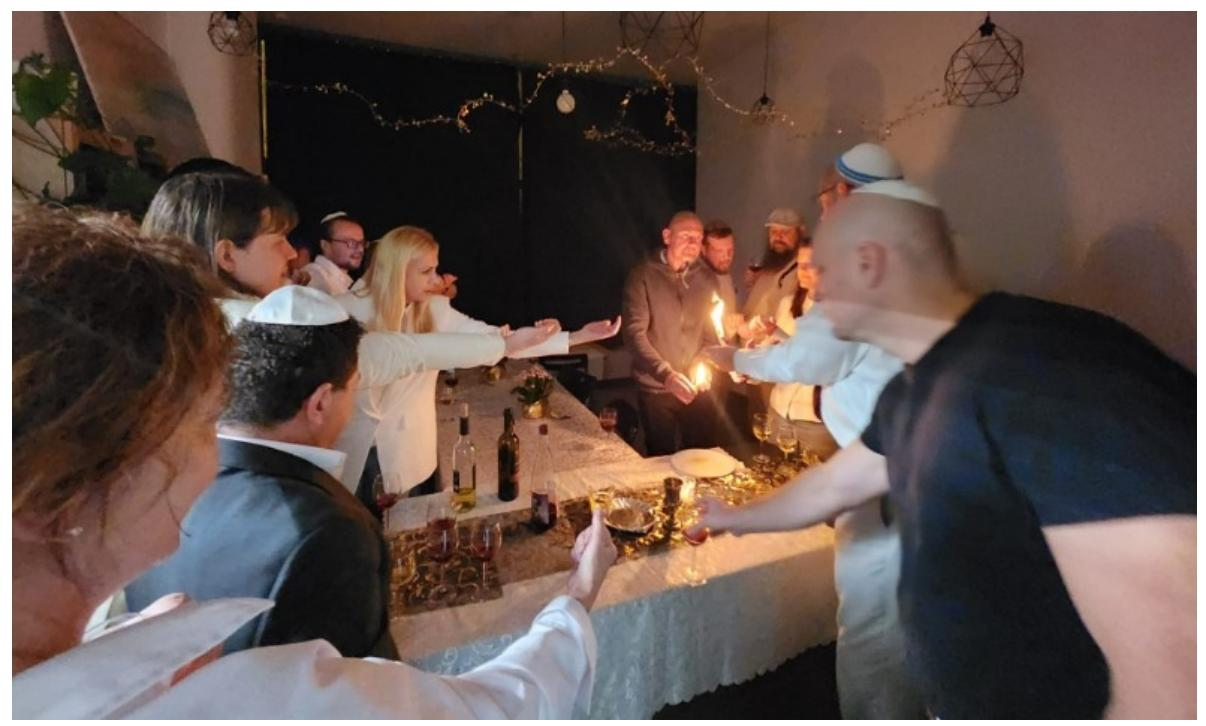
Judaism is an ancient, profound, and multifaceted tradition that defies simple categorization. It is not merely a religion but a comprehensive civilization, an intricate tapestry woven from threads of faith, peoplehood, culture, and a shared history spanning millennia. To understand Judaism is to explore a living, breathing entity that has shaped, and been shaped by, its journey through time. It encompasses a theological framework, a legal system, a rich body of literature, and a collective identity that binds millions across the globe. This guide delves into the foundational principles, the cultural expressions, and the enduring spirit of the Jewish people.
At its heart, Judaism is the story of a covenant, a relationship between God and the Jewish people. This relationship is defined by sacred texts, a commitment to ethical action, and a calendar that imbues time with sanctity. It is a tradition of questions as much as answers, where interpretation and debate are seen as acts of devotion. From its monotheistic origins to its modern-day denominations, Judaism remains a dynamic force, continually adapting while holding fast to its core values of justice, community, and the pursuit of a more perfect world.
The Core Tenets of Jewish Faith and Philosophy
The foundation of Jewish belief rests on several key principles that have guided the Jewish people for thousands of years. These tenets are not abstract theological concepts; they are designed to shape daily life, ethical behavior, and one’s relationship with both God and humanity.
Monotheism and the Covenant
The most fundamental principle of Judaism is a radical and uncompromising monotheism: the belief in one, indivisible, and transcendent God. This belief is encapsulated in the central Jewish prayer, the Shema Yisrael, which declares, “Hear, O Israel: The Lord our God, the Lord is one.” This was a revolutionary concept in the ancient world, distinguishing the early Hebrews from their polytheistic neighbors. This single God is understood to be the creator of the universe and the source of all morality. Central to this relationship is the concept of the covenant (brit), first established with Abraham and later renewed with Moses at Mount Sinai. This covenant is a pact in which God chose the Jewish people to receive His laws and, in return, they pledged to live by them and serve as a “light unto the nations.”
The Centrality of the Torah
The Torah is the cornerstone of Judaism. In its narrowest sense, it refers to the first five books of the Hebrew Bible (Genesis, Exodus, Leviticus, Numbers, and Deuteronomy), which are believed to have been revealed by God to Moses. However, in a broader sense, “Torah” encompasses the entirety of Jewish law and wisdom, including the Oral Law, which interprets and elaborates upon the written text. The Torah is not just a historical document but a living guide for ethical and ritual life, containing 613 commandments (mitzvot) that govern everything from prayer and diet to civil justice and interpersonal relationships. The study of Torah is considered a lifelong pursuit and a primary act of worship.
The Importance of Mitzvot (Commandments)
Mitzvot are the sacred obligations that structure Jewish life. These 613 commandments are the practical application of the covenant, transforming abstract beliefs into tangible actions. They are traditionally divided into two categories: positive commandments (actions one must perform) and negative commandments (actions one must refrain from). They cover a vast range of human activity, including ritual practices like observing the Sabbath (Shabbat) and dietary laws (kashrut), as well as ethical mandates such as giving charity, pursuing justice, and treating others with compassion. Performing mitzvot is seen as a way to sanctify daily life and strengthen one’s connection to God.
Tikkun Olam: The Mandate to Repair the World
A profound concept within Jewish thought is Tikkun Olam, which literally translates to “repairing the world.” This principle posits that humanity has a shared responsibility to act as partners with God in mending the imperfections of creation. It is a powerful call to social action and justice, compelling individuals and communities to address issues like poverty, inequality, and environmental degradation. Tikkun Olam moves Judaism beyond the realm of personal salvation, emphasizing a collective duty to create a more just, compassionate, and peaceful world for all people.

The Intertwined Identity of Faith, Peoplehood, and History
Judaism cannot be fully understood without recognizing the inseparable bond between its religious beliefs and the concept of a shared peoplehood. Jewish identity is not solely a matter of personal faith; it is an inheritance of collective memory, history, and destiny. This unique fusion of religion and nationhood has been a source of both immense strength and profound challenges throughout Jewish history.
Am Yisrael: The Concept of the Jewish People
The Hebrew term Am Yisrael (“the people of Israel”) captures this essence perfectly. From its origins, Judaism has been the story of a family, a tribe, and ultimately a nation. This sense of belonging transcends geography and levels of religious observance. One can be an atheist and still be considered a part of the Jewish people. This collective identity is forged through a shared ancestry tracing back to the patriarchs Abraham, Isaac, and Jacob; a common history of exile and return; and a sense of mutual responsibility for one another.
A History of Resilience: From Antiquity to Modernity
The history of the Jewish people is a testament to extraordinary resilience. It is a narrative marked by periods of sovereignty and scholarship, but also by centuries of dispersion (the Diaspora), persecution, and tragedy. From the destruction of the Temples in Jerusalem and the subsequent exiles to the Spanish Inquisition, pogroms in Eastern Europe, and the unimaginable horror of the Holocaust, Jewish communities have faced existential threats time and again. Yet, through it all, they have managed to preserve their identity, traditions, and sacred texts. This history of survival against all odds is a core element of the Jewish psyche, fostering a deep commitment to memory (“zachor”) and continuity.
The Role of Hebrew and the Land of Israel
Two pillars support the structure of Jewish peoplehood: the Hebrew language and the ancestral Land of Israel. Hebrew is not just a means of communication; it is Lashon Hakodesh, the “holy tongue.” It is the language of the Torah, of prayer, and of Jewish scholarship throughout the ages. Its modern revival as the spoken language of the State of Israel is a powerful symbol of national renewal. The Land of Israel holds a central place in Jewish consciousness as the promised land of the covenant. For centuries in the Diaspora, Jews prayed facing Jerusalem, and the hope of returning to Zion was a constant theme in liturgy and literature. The establishment of the modern State of Israel in 1948 represented the fulfillment of this ancient aspiration for many Jews.

The Rich Tapestry of Jewish Spiritual and Cultural Life
Jewish life is animated by a vibrant spiritual and cultural framework that sanctifies time, marks significant life passages, and fosters a strong sense of community. This “flowing river of wisdom” is built upon sacred texts, a unique calendar, and meaningful rituals that have been practiced and adapted for centuries.
Sacred Texts: Beyond the Torah to the Talmud
While the Torah is the foundation, Jewish wisdom extends into a vast sea of literature. The most significant of these is the Talmud, a massive compendium of legal debates, ethical discussions, legends, and interpretations of the Oral Law. Comprising the Mishnah and the Gemara, the Talmud is the primary text of rabbinic Judaism and the bedrock of Jewish law (Halakha). Its dialectical style, preserving multiple and often conflicting opinions, encourages critical thinking and continuous interpretation. This textual tradition underscores the Jewish value of lifelong learning and intellectual engagement with faith.
The Jewish Calendar: A Cycle of Holidays and Festivals
The Jewish calendar organizes the year around a cycle of holy days and festivals, each with its own history, rituals, and spiritual significance. These holidays transform the passage of time into a journey of collective memory and religious experience.
- The High Holy Days: Rosh Hashanah (the Jewish New Year) and Yom Kippur (the Day of Atonement) are a ten-day period of introspection, repentance, and prayer.
- The Pilgrim Festivals: Passover (Pesach), Shavuot, and Sukkot commemorate key events in Jewish history, such as the Exodus from Egypt and the receiving of the Torah.
- Shabbat (The Sabbath): The weekly day of rest, from Friday sunset to Saturday nightfall, is a cornerstone of Jewish life, a time for family, community, prayer, and disconnection from the labors of the weekday.
Life Cycle Events: From Birth to Death
Judaism provides rituals and ceremonies to mark major transitions in an individual’s life, embedding personal milestones within the context of the community and tradition. These include the Brit Milah (circumcision) for newborn boys, the Bar/Bat Mitzvah ceremony marking a child’s entry into religious adulthood, marriage ceremonies under the chuppah (wedding canopy), and detailed mourning rituals that provide structure and support for the bereaved.

Diverse Expressions of Judaism: A Case Study in the American South
Judaism is not a monolithic entity. Its adaptability has allowed it to flourish in diverse cultures across the globe, creating unique local expressions of Jewish identity. The experience of Jews in the American South provides a compelling case study of this dynamic interplay between an ancient tradition and a distinct regional culture.
The Unique History of Southern Jewry
Jewish history in the American South dates back to the colonial era, with some of the earliest Jewish communities in the United States established in cities like Charleston and Savannah. Unlike the large, concentrated immigrant communities of the Northeast, Southern Jews were often more dispersed, living in small towns where they were a tiny minority. This context fostered a unique path of integration and cultural exchange. Southern Jews became deeply embedded in the economic and civic life of their region, often achieving a level of social acceptance that was slower to come in other parts of the country.
Blending Traditions: Southern Hospitality and Jewish Values
Southern Jewish identity is characterized by a fascinating blend of cultures. It combines the deep-seated Jewish emphasis on community and family with the famed hospitality and genteel traditions of the South. This synthesis created a distinct cultural flavor, where synagogue potlucks might feature both kugel and cornbread. For generations, Southern Jews navigated a dual identity, fiercely proud of their Jewish heritage while also being undeniably Southern. They built synagogues that became architectural and social landmarks and contributed significantly to the business and political landscapes of their states.
Challenges and Contributions of a Distinct Community
The Southern Jewish experience was not without its challenges. Communities faced the constant threat of assimilation due to their small numbers and the pressures of living within an overwhelmingly Christian society. They also had to navigate the complex racial politics of the Old and New South, with individuals and communities responding in varied ways during the Civil War and the Civil Rights Movement. Despite these challenges, Southern Jews have made invaluable contributions, fostering interfaith dialogue and often serving as a “bridge” community, advocating for social justice rooted in both their Jewish and Southern values.
What Southern Judaism Teaches Us About Jewish Adaptability
The story of Southern Judaism matters because it illustrates the remarkable plasticity and resilience of Jewish identity. It shows that it is possible to maintain a strong connection to Jewish tradition while fully participating in and contributing to a surrounding culture. It reminds us that there is no single way to be Jewish and highlights the diverse ways in which Jewish life has been, and continues to be, lived throughout the world.

Judaism in the Contemporary World
Today, Judaism continues to be a dynamic and evolving civilization, grappling with the challenges of modernity while drawing strength from its ancient roots. Contemporary Jewish life is characterized by a spectrum of religious observance, theological perspectives, and cultural expressions.
Major Denominations
In the modern era, Jewish practice has diversified into several major movements or denominations, primarily in North America. Each offers a different approach to balancing tradition and modernity.
- Orthodox Judaism: Adheres to a strict interpretation and application of Jewish law (Halakha) as divinely inspired and unchanging. It is itself diverse, with subgroups ranging from Modern Orthodox to Haredi (or “ultra-Orthodox”).
- Conservative Judaism: Views Jewish law as binding but also as a living document that has historically evolved and can continue to evolve to meet contemporary needs. It seeks a middle ground between Orthodoxy and Reform.
- Reform Judaism: Emphasizes the ethical teachings of the prophets and individual autonomy in matters of religious belief and practice. It sees Jewish law as a set of guidelines rather than binding commandments and has been a pioneer in egalitarian practices, such as the ordination of female rabbis.
Other smaller movements, such as Reconstructionist and Renewal Judaism, also contribute to the religious landscape.
Navigating Modernity and Tradition
Contemporary Jews face a host of complex issues, including intermarriage, assimilation, the role of women in religious life, and evolving relationships with the State of Israel. Debates over these issues are vibrant and ongoing, reflecting the tradition’s long history of intellectual engagement and adaptation. The digital age has also transformed Jewish life, creating new platforms for learning, community building, and religious expression, connecting Jews across geographical boundaries in unprecedented ways.
The Enduring Legacy and Future of Judaism
After nearly four thousand years, the legacy of Judaism is undeniable. Its foundational ideas about monotheism, law, and social justice have profoundly influenced Western civilization and other major world religions. As it moves into the future, Judaism continues to be a source of spiritual meaning, ethical guidance, and communal identity for millions. It remains a “flowing river,” carrying ancient wisdom forward while carving new paths, demonstrating a remarkable capacity for renewal and a timeless commitment to its core values.
Frequently Asked Questions (FAQ)
- What is the difference between being Jewish and practicing Judaism?
- Being Jewish refers to being part of the Jewish people, which can be an ethnic, cultural, or ancestral identity. One can be born to a Jewish mother (the traditional definition) or convert, and be considered part of the Jewish people regardless of personal belief or level of religious observance. Practicing Judaism refers to the active engagement with the religious aspects of the tradition, such as observing Jewish law (Halakha), celebrating holidays, and attending synagogue. Therefore, a person can be ethnically Jewish without actively practicing the religion of Judaism.
- What is the Torah?
- The Torah is the most sacred text in Judaism. In its most specific sense, it refers to the Five Books of Moses: Genesis, Exodus, Leviticus, Numbers, and Deuteronomy. These books, which are read in their entirety in synagogues over the course of each year, contain the foundational narratives and laws of the Jewish people. More broadly, “Torah” can refer to the entire body of Jewish teaching, law, and wisdom, including the Oral Law as codified in the Talmud.
- What are some of the most important Jewish holidays?
- While there are many holidays, some of the most significant include Yom Kippur (the Day of Atonement), which is considered the holiest day of the year and is dedicated to fasting and repentance; Rosh Hashanah (the Jewish New Year); Passover (Pesach), which celebrates the liberation of the Israelites from slavery in Egypt; and Hanukkah, the festival of lights, which commemorates the rededication of the Temple in Jerusalem. The weekly observance of Shabbat, the Sabbath day of rest, is also a cornerstone of Jewish life.
- Is Judaism a race or a religion?
- Judaism does not fit neatly into the modern categories of “race” or “religion.” It is more accurately described as a civilization or an ethno-religion. It is a religion because it has a distinct theological system, sacred texts, and rituals. However, it is also an ethnicity or peoplehood (Am Yisrael) with a shared history, language, culture, and ancestral connection to the Land of Israel. People can join the Jewish people through religious conversion, but many Jews identify culturally or ethnically without being religiously observant.
- What is the concept of Tikkun Olam?
- Tikkun Olam is a Hebrew phrase that means “repairing the world.” It is a fundamental concept in modern Jewish ethics that conveys the idea that Jews are not only responsible for their own moral and spiritual welfare but also have a shared responsibility to work towards the betterment of society and the world at large. This includes pursuing social justice, protecting the environment, helping the needy, and performing acts of kindness. It positions humanity as a partner with God in the ongoing work of creation and perfection.