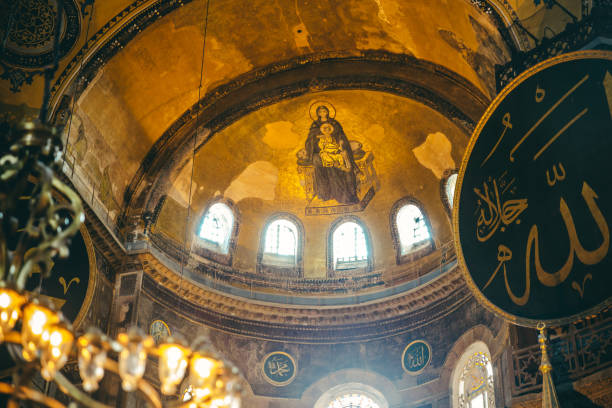
In the Islamic worldview, the existence of angels (Mala’ikah) is not merely a matter of folklore but a fundamental pillar of faith (Iman). To be a believer, one must acknowledge these celestial beings who inhabit a realm beyond human perception, serving as the bridge between the Creator and the created. Unlike the Western pop-culture depiction of angels as autonomous beings with human-like desires, the Islamic perspective defines them through their absolute proximity and unwavering submission to Allah.
The relationship between angels and God is defined by the concept of “Ubudiyyah” or perfect servitude. Created from light (Noor), angels lack the “Nafs” (ego) and free will that characterize human existence. This fundamental difference ensures that every action taken by an angel is a direct execution of a divine command. Understanding this relationship is crucial for comprehending how Allah governs the universe, delivers His messages, and monitors the deeds of mankind.
The Nature and Essence of Angels in Islamic Theology
To understand the relationship between angels and God, one must first look at their origin. According to authentic Hadith, the Prophet Muhammad explained that while Jinn were created from smokeless fire and humans from clay, angels were created from light. This luminous nature signifies their purity and their ability to transcend the physical limitations of the material world.
The Absence of Free Will
One of the most critical theological distinctions in Islam is that angels do not possess the capacity to disobey. In the Quran, Allah describes them as beings who “do not disobey Allah in what He commands them but do what they are commanded” (Surah At-Tahrim 66:6). This lack of choice is not a limitation but a functional necessity; as the administrators of the universe’s laws—from gravity to the movement of celestial bodies—their absolute reliability ensures the stability of creation.
Physical Attributes and Capabilities
While they are typically invisible to the human eye, angels can take on human forms when commanded by Allah, as seen in the accounts of the Archangel Gabriel appearing to Maryam (Mary) and the Prophet Muhammad. They are described as having wings—two, three, or four, and in the case of Gabriel, six hundred—which symbolize their speed and power in executing divine decrees across the vastness of the heavens and the earth.

A Hierarchy of Divine Service: Roles and Responsibilities
The relationship between God and His angels is highly organized. Allah has assigned specific portfolios to different angels, creating a celestial administration that manages every aspect of existence. This hierarchy demonstrates Allah’s “Rububiyyah” (Lordship) over all things.
| Angel Name | Primary Responsibility | Significance in Relationship to God |
|---|---|---|
| Jibreel (Gabriel) | Communication/Revelation | The trusted messenger who carries the Word of God to Prophets. |
| Mikail (Michael) | Sustenance and Nature | Responsible for rain, vegetation, and providing for physical life. |
| Israfil | The Resurrection | Tasked with blowing the trumpet to signal the end of time. |
| Malakul Mawt | The Transition | The Angel of Death who returns the soul to the Creator. |
| Kiraman Katibin | Record Keeping | Angels who record every human thought and action for Judgment. |
The Archangel Jibreel: The Spirit of Truth
Jibreel holds the highest status among the angels. His relationship with God is unique because he is the “Ruh al-Qudus” (The Holy Spirit), the medium through which the Quran was transmitted. This role highlights the importance of knowledge and guidance in the relationship between God and humanity, facilitated by the most trusted of celestial beings.

The Interaction Between Angels and the Human Experience
While angels are primarily focused on their relationship with Allah, a significant portion of their duties involves mankind. This interaction serves as a constant reminder of God’s presence and His meticulous care for His creation.
Guardian Angels and Record Keepers
Islam teaches that every individual is accompanied by angels. Some are “Mu’aqqibat” (protectors) who guard the person from harm by Allah’s leave, while others, the Kiraman Katibin, sit on the right and left shoulders to record good and bad deeds. This system ensures that the relationship between the human and the Creator is documented with divine precision, leaving no room for injustice on the Day of Reckoning.
Supplication and Support
Angels also play a supportive role for believers. They seek forgiveness for those on earth and attend gatherings where God is remembered (Dhikr). In times of battle or extreme hardship, Islamic history records instances where Allah sent “legions of angels” to provide psychological and physical support to the faithful, demonstrating that the angels are instruments of God’s mercy and victory.
Expert Insights: The Spiritual Significance of Mala’ikah
Understanding the role of angels shifts a believer’s perspective from a lonely existence to one where they are surrounded by a bustling, unseen world of light and obedience. This realization fosters “Taqwa” (God-consciousness), as the believer knows that even in solitude, they are never truly alone.
- Pro Tip: To increase your awareness of the angelic presence, focus on the “Salam” at the end of your prayers, which is a greeting to the angels recording your deeds.
- Theological Insight: The belief in angels prevents the deification of nature; instead of “Mother Nature,” Muslims recognize the angels like Mikail who manage the elements under God’s strict command.
- Behavioral Impact: Knowing that angels record every word encourages “Hifz al-Lisan” (guarding the tongue), a core virtue in Islamic ethics.
Frequently Asked Questions (FAQ)
- Do angels have genders in Islam?
- No. In Islamic theology, angels are genderless. The Quran specifically criticized the pagans of Mecca for calling angels the “daughters of Allah,” clarifying that they are honored servants with no such biological attributes.
- Is Iblis (Satan) a fallen angel?
- No. Unlike Christian tradition, Islam teaches that Iblis was a Jinn, not an angel. Jinn have free will, whereas angels do not. Iblis’s disobedience was a result of his own choice and arrogance, something an angel is incapable of.
- How many angels exist?
- Their number is known only to Allah. However, the Prophet Muhammad described the “Bayt al-Ma’mur” (the celestial Kaaba) in the heavens, where 70,000 different angels enter to pray every single day, never to return again, indicating an infinite and vast population.
- Can humans see angels?
- Generally, no. Angels exist in a different vibrational or spiritual state. However, Prophets could see them in their true form, and ordinary people might see them when they take on human form, though they may not recognize them as angels at the time.
- Do angels pray like humans?
- Angels are in a state of constant worship. Some have been in Ruku (bowing) since they were created, and others in Sujud (prostration), and they will remain so until the Day of Judgment, at which point they will raise their heads and say, “Glory be to You, we did not worship You as You deserve to be worshipped.”