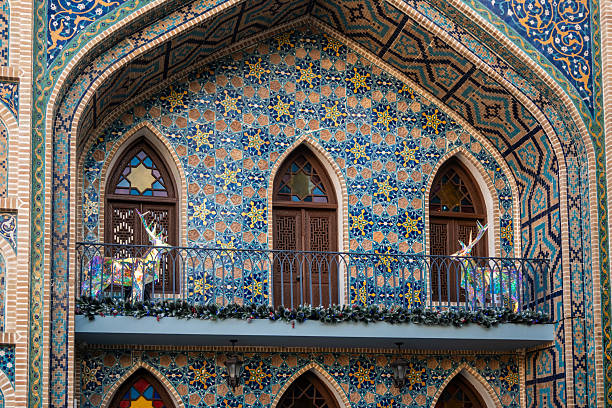
The Influence of Islamic Art: A Fusion of Culture and Faith
Islamic art is not merely an aesthetic endeavor; it is a profound visual representation of the divine, deeply intertwined with the core tenets of the Islamic faith. Unlike many Western artistic traditions that focus heavily on the human form, Islamic art is heavily influenced by the theological concept of Tawhid, the indivisible oneness of God. This foundational belief has guided centuries of artisans to develop unique, non-representational forms of expression that seek to elevate the soul rather than replicate the mortal world.
The Prohibition of Idolatry and the Rise of Calligraphy
To prevent the worship of idols, Islamic tradition generally discourages the depiction of sentient beings in religious contexts. This theological boundary birthed one of the most sophisticated calligraphic traditions in human history. The Arabic script, utilized to record the Quran, was elevated from a mere tool of communication to the highest form of visual art.
- Kufic Script: Characterized by its angular, linear proportions, this early script was predominantly used in architectural decorations and the earliest surviving copies of the Quran. Its rigid geometry reflects the unyielding nature of divine law.
- Naskh and Thuluth Scripts: As the art form evolved, these cursive, flowing scripts emerged, offering a sense of rhythm and movement that mirrors the continuous recitation of holy texts.
- Integration with Architecture: Calligraphy is rarely isolated; it is seamlessly integrated into the very walls of mosques, transforming structural columns and domes into readable manuscripts that surround the worshipper with the word of God.
The meticulous discipline required to master Arabic calligraphy is considered a form of dhikr (remembrance of God). The artist’s focus is entirely consumed by the sacred verses, ensuring that the act of creation is simultaneously an act of deep spiritual devotion.
Geometric Patterns and the Infinite Arabesque
Beyond the written word, Islamic art is globally renowned for its mesmerizing geometric patterns and arabesque designs. Because God is infinite and cannot be captured in a finite image, artisans utilized mathematics and geometry to represent the boundless nature of the universe.
These intricate, repeating patterns are not random; they are based on precise mathematical grids. A single central star often radiates outward, symbolizing the emanation of creation from a single divine source. The continuous, unbroken lines of the arabesque—a stylized motif of intertwining foliage and vines—represent the eternal nature of the soul and the interconnectedness of all living things. When a believer looks upon these infinite patterns, they are invited into a state of meditative contemplation, drawn away from the mundane and toward the transcendent.

Sacred Geography: The Spiritual Journey to Mecca and Medina
To understand the heartbeat of the Islamic faith, one must look toward the Arabian Peninsula, home to the two holiest cities in Islam: Mecca and Medina. These cities are not just historical landmarks; they are the spiritual epicenters toward which over a billion Muslims direct their daily prayers. The journey to these sacred sites is the culmination of a believer’s lifelong devotion.
Mecca and the Significance of the Kaaba
Mecca is the birthplace of the Prophet Muhammad and the site where the first revelations of the Quran descended. At its absolute center lies the Kaaba, a cuboid structure draped in black silk (the Kiswah) embroidered with gold calligraphic verses. Islamic tradition holds that the Kaaba was built by the Prophet Ibrahim (Abraham) and his son Ismail as the first house of worship dedicated to the one true God.
During the Hajj, the mandatory pilgrimage that every physically and financially able Muslim must undertake at least once in their lifetime, millions of believers converge on Mecca. The rituals performed here are deeply symbolic, retracing the footsteps of the prophets and stripping away all worldly distinctions. Pilgrims don simple white garments (Ihram), rendering kings and paupers indistinguishable before the Almighty.
Medina: The City of the Prophet
Following the intense spiritual exertion of Mecca, pilgrims traditionally travel to Medina, the city that provided sanctuary to the Prophet Muhammad during the Hijrah (migration) in 622 CE. Medina represents the realization of the first Islamic community and is characterized by a profound sense of tranquility and peace.
At the heart of the city is Al-Masjid an-Nabawi (The Prophet’s Mosque), recognizable by its iconic Green Dome, under which the Prophet is buried. Visiting Medina is not a mandatory part of the Hajj, but it is deeply cherished as an act of love and respect for the Prophet. The contrast between the two cities provides a holistic spiritual experience.
To fully grasp the distinct yet complementary roles of these two holy cities, consider the following comparative analysis:
| Attribute | Mecca | Medina |
|---|---|---|
| Spiritual Status | The Holiest City in Islam; home to the Kaaba. | The Second Holiest City; home to the Prophet’s Mosque. |
| Core Ritual Focus | Obligatory Hajj and Umrah pilgrimages. | Voluntary visitation (Ziyarah) and spiritual reflection. |
| Atmosphere | Intense, awe-inspiring, and majestic (Jalal). | Serene, welcoming, and beautiful (Jamal). |
| Historical Significance | Birthplace of Islam and site of early persecution. | The first Islamic state and sanctuary for early Muslims. |

The Light Under the Veil: Inner Purity and Outer Modesty
In contemporary global discourse, few aspects of Islamic culture are as widely discussed—and frequently misunderstood—as the veil, or Hijab. Often reduced by external observers to a mere piece of fabric or erroneously equated with oppression, the veil holds a profoundly different meaning for the millions of Muslim women who wear it. It is an outward manifestation of an inward spiritual state, a conscious choice of devotion, and a sanctuary of personal light.
Demystifying the Hijab: Beyond Physical Modesty
The term “Hijab” stems from the Arabic root meaning “to cover” or “to separate,” but in Islamic theology, it encompasses a comprehensive code of conduct known as Haya (modesty). This concept applies to both men and women, dictating not only how one dresses but also how one speaks, interacts, and carries oneself in the world.
For a Muslim woman, donning the veil is an act of Ibadah (worship). It is a private covenant between her and God, signaling a prioritization of spiritual identity over physical appearance. By choosing what to reveal and what to conceal, the wearer reclaims ownership of her body in a world that frequently commodifies the female form.
- A Shield of Dignity: The veil acts as a boundary that demands the wearer be engaged with based on her intellect, character, and spiritual substance, rather than her adherence to societal beauty standards.
- A Symbol of Empowerment: Contrary to narratives of subjugation, many women describe the hijab as a deeply empowering choice. It is a daily, deliberate reaffirmation of faith that requires immense courage, especially in societies where it may invite prejudice.
- The Inner Light: The physical covering is meant to protect the “light” within the heart. It is not a cover-up of shame, but a guarding of something profoundly sacred and precious.
Understanding the veil requires shifting the paradigm from viewing it as a restriction to recognizing it as a liberation from the superficial. It is a mobile sanctuary, allowing the believer to carry a piece of sacred space with them into the secular world, maintaining a constant, silent dialogue with the Divine.

The Global Impact of Islamic Traditions on Modern Society
The threads of Islamic art, the profound journeys to Mecca and Medina, and the deeply personal commitment symbolized by the veil are not isolated phenomena. Together, they weave a comprehensive worldview that continues to shape global culture. The aesthetic principles born out of Islamic theology have heavily influenced modern architecture, mathematics, and visual arts worldwide.
Furthermore, the logistical and spiritual marvel of the Hajj serves as one of the greatest annual testaments to human equality and global unity, gathering diverse ethnicities and nationalities under a single purpose. Meanwhile, the steadfast presence of the hijab in modern public spheres challenges global societies to expand their definitions of feminism, agency, and religious freedom.
Ultimately, these elements demonstrate that Islam is not merely a set of historical dogmas, but a living, breathing culture. Whether through the stroke of a calligrapher’s reed pen, the circumambulation of the Kaaba, or the daily wrapping of a veil, the essence of the faith is continuously reconstructed and reaffirmed, proving that the intertwining of culture and faith is a dynamic and enduring force.
Frequently Asked Questions (FAQ)
- Q1: Why are there no human figures in traditional Islamic mosque architecture?
- Traditional Islamic art avoids depicting sentient beings to prevent idolatry (shirk) and to maintain absolute focus on the oneness of God (Tawhid). Instead of human figures, Islamic architecture utilizes intricate geometric patterns, arabesques, and Arabic calligraphy to inspire spiritual contemplation without risking the worship of the created rather than the Creator.
- Q2: Can non-Muslims visit the holy cities of Mecca and Medina?
- Historically and currently, the city limits of Mecca are strictly reserved for Muslims, as the entire city is considered a sacred sanctuary (Haram) dedicated exclusively to worship and pilgrimage. Parts of Medina, particularly the central area containing the Prophet’s Mosque, are also restricted, though some outer areas of the city have recently become more accessible to non-Muslim tourists under new Saudi regulations.
- Q3: Is the veil (Hijab) only about physical clothing?
- No. While the physical headscarf is the most visible aspect, the concept of Hijab is rooted in the broader principle of ‘Haya’ (modesty). This encompasses a holistic approach to life, including modesty in speech, gaze, behavior, and interpersonal interactions. It is a state of inner purity that is outwardly reflected in one’s dress and conduct.
- Q4: What is the significance of the Kaaba if Muslims do not worship it?
- Muslims do not worship the Kaaba; they worship God alone. The Kaaba serves as the ‘Qibla,’ the unifying focal point toward which all Muslims around the world face during their daily prayers. It represents the metaphysical center of the Islamic world and symbolizes the unity of the global Muslim community (Ummah) in their singular devotion to God.
- Q5: How do geometric patterns in Islamic art reflect theological beliefs?
- Geometric patterns in Islamic art are highly symbolic. They are designed to expand in all directions seamlessly, representing the infinite, boundless nature of God. The reliance on mathematical precision reflects the order and harmony of the universe created by the Divine, inviting the viewer into a meditative state that transcends the physical world.