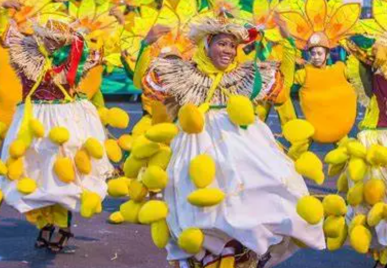
The earliest settlers in the Philippine Islands are generally considered to be the Negritos. Although they are now rare in number, they still stick to their very traditional lifestyle and culture. Then the Austronesians arrived, and the Austronesian culture left a deep mark on the majority ethnic groups and languages of the Philippines.
The profound changes brought about by Spanish colonization
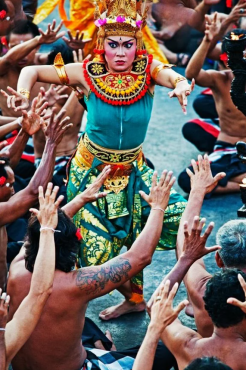
In the 16th century, Spanish colonial rule opened a new chapter in the Philippines, which has since become a unified entity. The Spanish vigorously spread Christianity in this land, which profoundly influenced the religious beliefs of the locals. Many churches and monasteries sprang up, and Catholicism gradually became dominant in the Philippines. To this day, about 80.58% of the population of the Philippines are Roman Catholics.
Spanish culture has a profound influence on the Philippine language. Filipino has absorbed a lot of Spanish words, such as “mesa” (table) and “ventana” (window). In the field of architecture, many towns are planned around the central square, and typical Spanish-style buildings can be seen everywhere, such as the Church of St. Augustine in Manila. The traditional dance Cariñosa also incorporates the elegance and passion of Spanish culture.
The diet is also deeply influenced by Spain. Philippine dishes such as Adobo and Calderata are influenced by Spanish cuisine in terms of cooking methods and ingredients. Religious festivals such as Holy Week and Halloween are also the product of Spanish missionary work.
Modern changes under the influence of the United States
In the nearly 50 years since it became a U.S. territory, American culture has permeated all aspects of Philippine society. English is widely used and has become one of the official languages of the Philippines, playing an important role in education, media, and business.
American popular culture, such as Hollywood movies, pop music, and fast food culture, is very popular in the Philippines. American fast food chains such as KFC and McDonald’s can be seen everywhere on the streets of the Philippines. Modern clothing styles are also deeply influenced by the United States, and T-shirts and jeans have become common choices for people’s daily wear.
The introduction of the American education system has completely changed the education landscape in the Philippines. Today, Filipino students go from nursery to kindergarten, enter elementary school at around seven years old, and then go through junior high school and high school. The K-12 system is implemented, and students can choose different professional tracks based on their own interests to prepare for college life or employment.
The persistence and inheritance of Philippine local culture
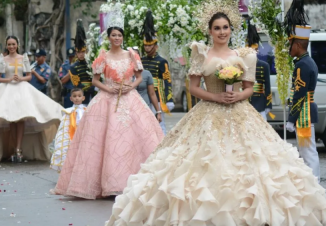
Mayflower Festival (Spanish: Flores de Mayo)
Despite the impact of many foreign cultures, the native culture of the Philippines still survives tenaciously. In remote mountainous areas and some islands, some ethnic groups have preserved their traditional lifestyles, languages and religious beliefs intact.
Traditional buildings in the Philippines, such as the Nipa hut, are made of bamboo and coconut as the main materials, and the roof is paved with wormwood, Nipa palm leaves or coconut leaves, reflecting the wisdom of the Filipinos in adapting to local conditions. The traditional dance Tinikling imitates birds jumping in the bamboo forest, which is very distinctive. Folk music is also diverse, and music played by various instruments conveys joy in festivals and celebrations.
The unique charm of Philippine culture
The unique charm of Philippine culture is the result of the deep integration of multiple cultures. In terms of religion, Christianity and local primitive beliefs are intertwined. Many Filipinos believe in Catholicism while still respecting their ancestors and natural spirits.
In terms of food, Philippine cuisine combines local, Chinese, Indian, Spanish and other flavors. Lumpia is similar to Chinese spring rolls, but incorporates local Philippine ingredients and cooking methods; and roast suckling pig (Lechón) from Spain has also become an indispensable delicacy in Philippine festivals.