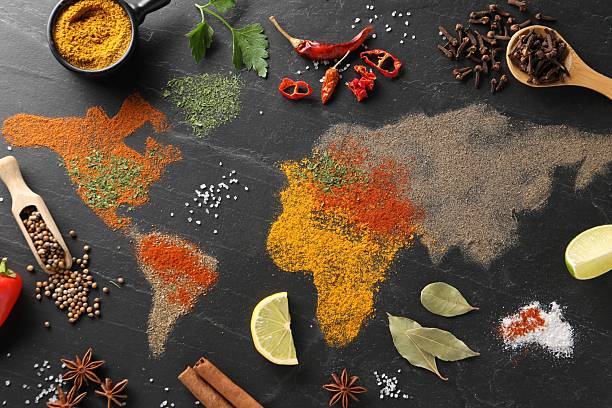
The history of the world is inextricably linked to the pursuit of flavor, fragrance, and preservation. For millennia, the spice trade was the world’s most significant economic engine, a force so powerful it fueled exploration, built and destroyed empires, and redrew the maps of the known world. This guide explores the epic journey of spices, from their origins in the East along the legendary Silk and Spice Roads to their arrival in the kitchens and apothecaries of the West, examining the profound impact of this global commerce.
The Origins of the Spice Trade: More Than Just Flavor
Long before spices were a common kitchen staple, they were rare, mysterious commodities valued as much as gold. The spice trade dates back to at least 2000 BCE, with evidence of cinnamon and cassia being traded in the Middle East. The incredible value of spices stemmed from their diverse applications beyond culinary use.
The “Why” Behind the Value
To understand the power of the spice trade, one must grasp why these plant-based products were so coveted:
- Food Preservation: In an era before refrigeration, spices like cloves and pepper, with their antimicrobial properties, were essential for preserving meats and making slightly spoiled food palatable.
- Medicinal Properties: Ancient and medieval medicine relied heavily on spices. Nutmeg was believed to ward off the plague, ginger was used to treat digestive ailments, and cloves were a remedy for toothaches.
- Religious Rituals: Spices played a central role in religious ceremonies across many cultures. Frankincense and myrrh were burned as incense in temples, and spices were used in embalming rituals, most famously by the ancient Egyptians.
- Status Symbol: The extreme cost of spices made them the ultimate luxury good. Serving spiced food was a way for the nobility and wealthy merchants to display their immense wealth and social standing.

The Great Trade Routes: Silk Road and Spice Road
Two legendary networks formed the backbone of the ancient spice trade: the overland Silk Road and the maritime Spice Road (or Sea Routes). While often discussed together, they were distinct systems that complemented each other.
The Silk Road: The Overland Artery
The Silk Road was a vast network of trade routes connecting the East and West, stretching from China to the Mediterranean Sea. While famed for silk, it was also a crucial conduit for lighter, high-value goods, including spices like ginger and cassia. Camel caravans braved treacherous deserts and mountains, with goods changing hands multiple times, increasing the price at each stop. This overland route was instrumental in facilitating not just commerce, but also cultural, religious, and technological exchange.
The Spice Road: The Maritime Superhighway
The true heart of the spice trade was the maritime route. This sea-based network connected the “Spice Islands” (the Moluccas in modern-day Indonesia), India, and the Arabian Peninsula to the ports of the Red Sea and the Persian Gulf. Monsoon winds were the key to this trade, allowing sailors to make predictable, seasonal journeys across the Indian Ocean. This route could carry bulkier goods like pepper and cinnamon more efficiently than the overland Silk Road. For centuries, Arab traders monopolized these sea lanes, jealously guarding the secret of the monsoon winds and the origins of their precious cargo.

The Age of Discovery: Europe’s Quest for Direct Access
By the late Middle Ages, the Republic of Venice held a stranglehold on the European end of the spice trade, buying from Arab merchants in Alexandria and distributing the spices across Europe at exorbitant prices. This monopoly, combined with the fall of Constantinople in 1453 which further disrupted overland routes, incentivized other European powers, particularly Portugal and Spain, to find a direct sea route to the Indies.
Vasco da Gama and the Route to India
In 1498, the Portuguese explorer Vasco da Gama successfully navigated around the Cape of Good Hope in Africa and reached Calicut, India. This monumental achievement shattered the Venetian-Arab monopoly. Portugal quickly established a series of fortified trading posts across the Indian Ocean, using military force to seize control of the lucrative trade routes and dominate the flow of spices into Europe for the next century.
Christopher Columbus and the “New World”
Financed by Spain, Christopher Columbus sought a westward route to the Indies in 1492. While he famously landed in the Americas instead, his voyages were driven by the promise of spices. Though he did not find the pepper and cloves of the East, his exploration introduced Europe to New World “spices” like chili peppers and allspice, initiating the Columbian Exchange that would transform global cuisine.

The Rise of Colonial Empires and Corporate Power
The Portuguese dominance was eventually challenged by other European powers. The 17th century saw the rise of the Dutch and English, who introduced a new model of commerce: the state-chartered trading company.
The Dutch East India Company (VOC)
The VOC was a proto-corporation granted a monopoly on the Asian trade by the Dutch government. It possessed quasi-governmental powers, including the ability to wage war, negotiate treaties, and establish colonies. The VOC was ruthless in its pursuit of profit, violently seizing control of the Spice Islands to create a monopoly on highly-prized nutmeg and cloves, often at a horrific human cost to the local populations.
The British East India Company
Similarly, the British East India Company focused its efforts primarily on India, establishing control over the trade in pepper and textiles. The competition between these companies was fierce and often violent, representing a new phase of the spice trade driven by corporate ambition and backed by national military power. This era laid the groundwork for centuries of European colonialism.
Legacy and Modern Impact of the Spice Trade
The decline of the spice trade’s economic dominance came as spices became more widely cultivated and less rare. However, its legacy is immense and continues to shape our world. The quest for spices directly led to the globalization of the planet, connected civilizations, and resulted in unprecedented exchanges of goods, ideas, and diseases. It fueled the rise of mercantilism, modern banking, and the corporation, while also ushering in the dark era of colonialism. Today, every time we use pepper, cinnamon, or nutmeg, we are tasting the result of this epic, world-changing history.
Key Players in the Spice Trade: A Comparison
| Empire/Group | Era of Dominance | Key Routes Controlled | Primary Spices |
|---|---|---|---|
| Arab Traders | c. 7th – 15th Century | Maritime Indian Ocean, Red Sea | Pepper, Cloves, Nutmeg, Cinnamon |
| Republic of Venice | c. 13th – 15th Century | Mediterranean Distribution (from Alexandria) | All spices (as middlemen) |
| Portuguese Empire | 16th Century | Sea Route around Africa to India | Pepper, Cinnamon |
| Dutch (VOC) | 17th Century | Spice Islands (Moluccas), Indonesia | Nutmeg, Mace, Cloves (monopoly) |
Frequently Asked Questions (FAQ)
-
Why were spices so incredibly expensive in the past?
- Spices were expensive due to a combination of factors. The sources were geographically limited and often kept secret. The transportation routes were long and perilous, whether by land or sea. Finally, the supply chain involved numerous middlemen (from Arab traders to Venetian merchants), each adding a significant markup to the final price.
-
What is the main difference between the Silk Road and the Spice Road?
- The primary difference was the mode of transport and the primary goods. The Silk Road was a network of overland routes famous for carrying high-value, low-weight luxury goods like silk. The Spice Road (or Maritime Silk Road) was a sea-based network that could transport bulkier goods like pepper and cinnamon more efficiently across the Indian Ocean. While they overlapped and connected, they were distinct systems.
-
How did the spice trade lead to the Age of Discovery?
- European nations like Spain and Portugal were desperate to break the monopoly held by Venice and the Mamluk Sultanate of Egypt on the spice trade. The immense profits to be made from direct trade with the East provided a powerful economic incentive for explorers to seek new sea routes, leading Columbus to sail west and Vasco da Gama to sail south around Africa.
-
Which country ultimately dominated the spice trade?
- Dominance shifted over time. Arab traders controlled the source for centuries. The Republic of Venice dominated European distribution in the late Middle Ages. Portugal seized control of the sea routes in the 16th century, only to be supplanted by the Dutch, who established a brutal monopoly on key spices in the 17th century. Later, the British and French also became major players. No single country held dominance throughout its entire history.