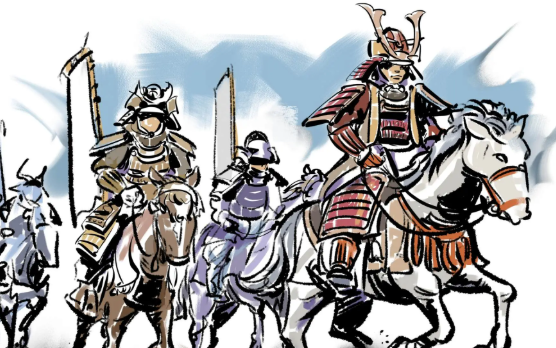
The Socio-Political Landscape of the Warring States
The Sengoku Jidai, or Warring States period, represented a century-long collapse of central authority in Japan, beginning with the Onin War in 1467. During this era, the Ashikaga Shogunate lost its grip on the provincial military governors, known as shugo, leading to a power vacuum where local warlords—the daimyo—fought for regional hegemony.
The Rise of the Daimyo
The transformation of local governance was absolute. Daimyo replaced traditional aristocratic rule with a meritocratic, land-based military system. Their power was derived not from imperial favor, but from their ability to tax the land and command a loyal warrior class.
- Territorial Consolidation: Daimyo focused on securing internal agricultural resources to fund standing armies.
- Legal Reform: Implementation of house codes (buke-shohatto) to control vassals and regulate social conduct.

Military Innovations and Tactical Shifts
As the conflict intensified, the nature of warfare shifted from ritualistic samurai duels to large-scale, combined-arms operations. The introduction of tanegashima (matchlock muskets) by the Portuguese in 1543 fundamentally altered the battlefield hierarchy, rendering traditional mounted archery less decisive.
The Integration of Firearms
The adoption of firearms allowed daimyo to field large infantry units composed of ashigaru (foot soldiers). This shift necessitated complex drilling and logistics to maintain volley fire, a tactic famously utilized by Oda Nobunaga at the Battle of Nagashino in 1575.
| Weaponry | Strategic Impact | Primary User |
|---|---|---|
| Tanegashima | Mass volley fire/Infantry focus | Oda Nobunaga |
| Yari (Pikes) | Anti-cavalry formations | General Ashigaru Units |
| Cannons (Kunikuzushi) | Siege warfare & castle demolition | Otomo Sorin/Late Warlords |

Fortification and Siege Engineering
With the escalation of artillery, defensive structures evolved into the iconic Japanese castles. These structures were designed not just as residences, but as sophisticated defensive networks incorporating stone foundations, massive moats, and intersecting fields of fire.
Evolution of Castle Design
Early mountain fortresses were replaced by hirayamajiro (castles on hills rising from plains). These featured:
- Ishigaki: Steep, curved stone walls designed to resist earthquakes and climbing.
- Masugata: Square gate systems that trapped attackers in a crossfire zone.
- Tenshu: The central keep, serving as a final redoubt and symbol of the daimyo’s absolute authority.

The Path to National Unification
Unification was the culmination of three distinct phases led by three key figures: Oda Nobunaga, Toyotomi Hideyoshi, and Tokugawa Ieyasu. Each contributed a unique pillar to the final structure of the Edo period.
The Three Unifiers
Nobunaga broke the power of the Buddhist monasteries and centralized the military base. Hideyoshi implemented the “Sword Hunt” to disarm the peasantry, effectively separating the warrior class from the agrarian class. Finally, Ieyasu solidified the peace by establishing the Tokugawa Shogunate, a rigid social hierarchy that lasted over 250 years.
Frequently Asked Questions (FAQ)
- Q1: Why was the matchlock musket so revolutionary?
- The matchlock allowed untrained foot soldiers to defeat highly skilled, lifelong samurai, effectively democratizing the battlefield and shifting power to daimyo who could field the largest armies.
- Q2: What was the primary role of the Ashigaru?
- Ashigaru were the backbone of the Sengoku military. They were light infantry who utilized pikes and, later, firearms, allowing daimyo to conduct long-term campaigns rather than short, localized skirmishes.
- Q3: How did castles change during the late Sengoku period?
- Castles moved from simple wooden stockades to massive stone-walled complexes designed to withstand both artillery bombardment and prolonged sieges, serving as both military hubs and administrative centers.
- Q4: What was the “Sword Hunt” (Katanagari)?
- Implemented by Toyotomi Hideyoshi, this decree confiscated weapons from farmers to prevent peasant uprisings and ensure that only the samurai class held the right to bear arms, stabilizing the social order.