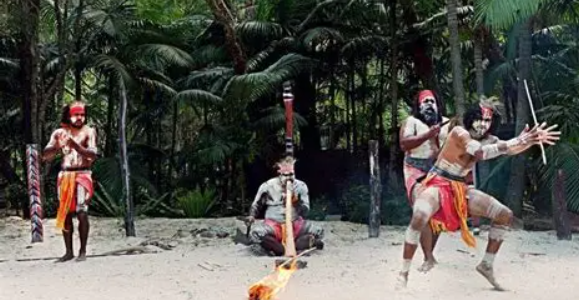
Defining Cultural Authenticity in a Globalized Era
The question of whether Indigenous culture remains in its “original form” is a subject of intense debate among anthropologists, historians, and the Indigenous communities themselves.
Often, external observers fall into the trap of “essentialism”—the belief that a culture must remain frozen in time to be considered authentic.
However, culture is a living, breathing entity.
True authenticity lies not in static repetition of the past, but in the continuity of values, language, and spiritual connection to the land, even as tools and lifestyles evolve.
The Myth of the Static Culture
Anthropological research suggests that no culture is static.
Indigenous groups have historically engaged in trade, technological exchange, and social adaptation long before the onset of modern globalization.
Viewing Indigenous culture through a lens of “purity” often denies these communities their agency and their historical capacity for innovation.

Strategic Adaptation: The Mechanics of Cultural Resilience
Modern Indigenous communities are masterfully blending traditional knowledge with contemporary technology to ensure cultural survival.
This process, known as “selective adaptation,” allows communities to adopt beneficial modern tools—such as digital mapping for land rights or social media for language revitalization—without sacrificing their core identity.
Key Areas of Cultural Integration
- Language Revitalization: Utilizing mobile apps and AI to document and teach endangered dialects.
- Land Management: Combining ancestral ecological knowledge (TEK) with modern satellite data to combat climate change.
- Economic Sovereignty: Leveraging traditional crafts and tourism to fund community-led education and healthcare initiatives.
| Perspective | View on Authenticity | Focus |
|---|---|---|
| Traditionalist | Preservation of rituals and language | Avoidance of external influence |
| Modernist | Cultural fluidity and adaptation | Survival through integration |
| Balanced | Core values remain, form evolves | Empowerment and resilience |
Pro Tips for Supporting Authentic Indigenous Initiatives
When engaging with or studying Indigenous cultures, it is vital to move beyond superficial consumption.
Support initiatives that are community-led rather than commercially exploited.
- Verify Sources: Ensure that the cultural goods or information you consume come directly from Indigenous-owned enterprises.
- Respect Intellectual Property: Recognize that traditional knowledge belongs to the community, not the public domain.
- Listen First: Prioritize the voices of community elders and youth leaders over external academic interpretations.
Frequently Asked Questions (FAQ)
- Does using modern technology make an Indigenous culture less authentic?
- No. Technology is a tool. If a community uses a smartphone to record oral histories or protect their territory, they are utilizing modern means to uphold ancient responsibilities, which reinforces rather than diminishes their culture.
- What is the biggest threat to Indigenous cultural integrity today?
- The primary threat is not modernization, but rather the erasure of land rights and the lack of access to language and educational resources. Cultural integrity relies heavily on the ability to remain connected to ancestral territories.
- How can we distinguish between cultural appreciation and appropriation?
- Appreciation involves learning, respecting, and supporting the community’s own narrative. Appropriation involves taking elements of a culture for profit or fashion without consent, acknowledgment, or understanding of their sacred significance.
- Why is the concept of “original form” considered problematic?
- The “original form” narrative is often used to marginalize Indigenous peoples by suggesting that if they change, they are no longer “real.” It denies them the right to evolve, which is a fundamental human experience shared by all cultures worldwide.