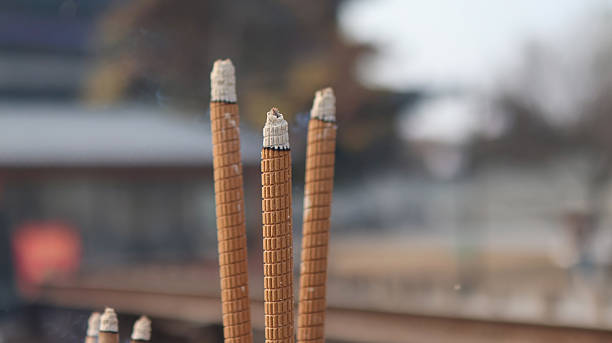
The gentle ascent of a wisp of smoke, carrying with it a delicate fragrance, has been a profound and universal symbol across human civilizations for millennia. Incense, in its myriad forms, has served as a bridge between the mundane and the divine, a tool for purification, meditation, and aesthetic pleasure. This comprehensive exploration delves into the intricate global journey of incense, tracing its sacred origins in ancient lands, its diverse cultural manifestations in India and Japan, and its enduring legacy as a potent element in spiritual and daily life. Far from a mere aromatic, incense embodies deep historical narratives, complex ritualistic practices, and profound philosophical insights that continue to resonate today.
The Ancient Origins of Incense: From Egyptian Temples to Global Spread
The story of incense begins in the cradle of ancient civilizations, where its properties were first harnessed for religious and practical purposes. The earliest documented uses point to the rich cultural landscape of ancient Egypt, a civilization deeply intertwined with the sacred and the afterlife. Here, incense was not merely an accessory but an integral component of religious rites, funerary practices, and even daily life, setting the stage for its global proliferation.
Early Egyptian Use and Significance
In ancient Egypt, incense held a multifaceted significance, extending beyond simple fragrance. It was discovered and utilized primarily for its aromatic qualities, which were believed to possess purifying, protective, and spiritually elevating powers. One of its most crucial applications was in the complex process of mummification, where aromatic resins like frankincense and myrrh were used to preserve bodies and mask odors, symbolizing a connection to the divine and ensuring safe passage to the afterlife. Beyond funerary rites, incense was routinely offered to deities in temples, forming a critical part of daily rituals known as “divine offerings.” The smoke was thought to carry prayers and supplications directly to the gods, creating a sacred atmosphere conducive to spiritual communion.
- Kyphi: A prime example of Egyptian incense was Kyphi, a complex blend of up to sixteen ingredients including myrrh, frankincense, honey, wine, and various spices. It was burned at sunset, believed to soothe the gods, purify the air, and even induce sleep and vivid dreams. This specific blend highlights the Egyptians’ sophisticated understanding of botanical properties and their symbolic applications.
- Purification and Protection: Beyond its role in offerings, incense was burned to purify temples, homes, and individuals, warding off evil spirits and negative energies. Its use was deeply embedded in the belief system that cleanliness, both physical and spiritual, was paramount for divine favor.
The Global Journey of Aromatic Smoke
From its foundational role in Egypt, the practice of using incense began its expansive journey across continents, facilitated by burgeoning trade networks. The demand for rare aromatic resins like frankincense and myrrh spurred the development of ancient trade routes, most notably the Incense Route, which connected the Arabian Peninsula to the Mediterranean and beyond. This intricate web of commerce allowed not only the ingredients but also the associated rituals and beliefs to spread, adapting to diverse cultural contexts along the way.
- Spread through Trade Networks: The Silk Road, maritime routes across the Indian Ocean, and land routes through Mesopotamia were crucial conduits for the exchange of aromatic materials. Merchants carried frankincense from Oman, myrrh from Somalia, and various spices and resins from India and Southeast Asia, introducing these precious commodities to new civilizations.
- Adaptation in Various Ancient Civilizations: Incense found new homes and purposes in Mesopotamia, where it was used in divination and offerings to city gods; in ancient Greece and Rome, where it played roles in civic ceremonies, personal hygiene, and religious sacrifices; and in early Christian and Jewish traditions, symbolizing prayer and divine presence. Each culture integrated incense into its unique spiritual and social fabric, demonstrating its universal appeal and adaptability.
- Evolution of Incense Forms and Ingredients: Initially, incense often consisted of raw resins and herbs burned directly. Over time, as craftsmanship evolved, so did the forms of incense. From loose powders and resin chunks, it progressed to sophisticated blends and eventually to the development of stick and cone forms, particularly in Asia, marking a significant evolution in both its production and consumption.

Indian Incense: Weaving Sacred Atmosphere into Religious Rituals
India, a land renowned for its profound spirituality and rich cultural tapestry, embraced incense with unparalleled fervor. Here, incense transcends its role as a mere fragrance, becoming an indispensable element in daily life, religious ceremonies, and spiritual practices. The burning of incense in India is an act steeped in tradition, symbolism, and an unwavering belief in its power to connect the earthly with the divine, creating a truly sacred atmosphere.
The Integral Role of Incense in Hindu and Buddhist Practices
In the vast panorama of Indian spirituality, particularly within Hinduism and Buddhism, incense holds a central and revered position. Its use is not arbitrary but deeply embedded in scriptural injunctions, ancient customs, and devotional practices that have been refined over millennia. The act of lighting incense is a multi-sensory experience designed to purify the environment, focus the mind, and elevate the spirit, making it a cornerstone of worship and meditation.
- Offerings to Deities (Puja): During a ‘puja,’ the ritualistic worship of one or more deities, incense (often referred to as ‘agarbatti’ or ‘dhoop’) is one of the essential offerings, representing the element of air or ether. The rising smoke is believed to carry prayers and intentions to the heavens, pleasing the gods and inviting their blessings. It is a gesture of devotion, respect, and surrender, symbolizing the devotee’s aspirations rising towards the divine.
- Purification and Creating a Meditative Environment: Beyond offerings, incense is crucial for purifying the ritual space, dispelling negative energies, and fostering an atmosphere conducive to meditation and spiritual contemplation. The fragrant smoke is thought to cleanse the aura, calm the mind, and prepare the individual for deeper spiritual work. In Buddhist monasteries, vast quantities of incense are burned daily, marking the passage of time and aiding monks in their rigorous meditative practices.
- Symbolism of Smoke Carrying Prayers: The ephemeral nature of incense smoke, slowly dissipating into the vastness of the sky, serves as a powerful metaphor for the transient nature of existence and the aspiration of the soul to merge with the ultimate reality. Each wisp of smoke is a silent prayer, a fragrant message sent to the cosmos, reinforcing the spiritual connection between humanity and the divine.
Types of Indian Incense and Their Cultural Significance
The diversity of India is reflected in its incense, with a wide array of forms, ingredients, and regional specialties. Each type carries its own unique cultural significance and is often associated with specific rituals, deities, or desired effects. The craftsmanship involved in creating these aromatic blends is often a hereditary art, passed down through generations, preserving ancient recipes and techniques.
- Agarbatti (Stick Incense): Perhaps the most ubiquitous form, agarbatti consists of a bamboo stick coated with a paste of charcoal, wood powder, natural resins, essential oils, and aromatic herbs. It burns slowly, releasing a continuous stream of fragrance. Various scents are associated with different deities or purposes; for example, sandalwood is often used for Vishnu, jasmine for prosperity, and frankincense for purification.
- Dhoop: Dhoop is a solid, often cone-shaped or rope-like incense without a bamboo core. It tends to produce a richer, more concentrated smoke and is traditionally used in more intense purification rituals or for specific offerings. Ingredients are often similar to agarbatti but in different proportions, emphasizing certain resins or aromatic woods.
- Traditional Ingredients: The heart of Indian incense lies in its diverse and potent ingredients. Sandalwood (Chandan) is prized for its cooling, calming, and meditative properties, often associated with purity and devotion. Frankincense (Olibanum) and Myrrh have ancient roots and are used for purification and spiritual elevation. Other common ingredients include amber, patchouli, vetiver, various flowers (like jasmine and rose), and a wide array of medicinal herbs, each contributing to the complex aromatic profiles and spiritual efficacy of the incense.
- Regional Variations and Ritualistic Uses: Different regions of India boast unique incense traditions. In South India, for instance, elaborate floral and herbal blends are common, while in the Himalayan regions, specific resins and medicinal herbs are incorporated, reflecting the local flora and spiritual practices, often linked to Ayurvedic principles. Certain festivals or ceremonies demand particular types of incense, underscoring its deep integration into the cultural calendar.

The Genesis of Japanese Incense: From Buddhist Introduction to Agarwood Culture
While incense traditions flourished in ancient Egypt and India, Japan developed its own uniquely refined and deeply aesthetic approach to aromatic smoke. The introduction of incense to Japan was intrinsically linked to the arrival of Buddhism, marking a pivotal moment in the nation’s cultural and spiritual development. From its initial role in religious ceremonies, incense gradually evolved into a sophisticated art form, particularly with the veneration of agarwood.
Buddhism’s Arrival and the Introduction of Incense to Japan
The sixth century CE marked a transformative period for Japan with the official introduction of Buddhism from Korea and China. Along with Buddhist scriptures, statues, and rituals, came the practice of burning incense. This new aromatic custom was readily embraced, initially by the imperial court and subsequently by the wider populace, profoundly influencing Japanese aesthetics and spiritual life.
- Sixth Century Introduction via Korea and China: The earliest recorded instance of incense arriving in Japan dates back to 595 CE, when a piece of fragrant agarwood drifted ashore on Awaji Island. However, its systematic introduction and integration into cultural practices occurred with the spread of Buddhism. Buddhist monks and emissaries brought incense as part of their sacred paraphernalia, using it in ceremonies to purify the space, aid meditation, and honor the Buddha.
- Initial Use in Buddhist Ceremonies and Temples: Incense quickly became an indispensable element in Japanese Buddhist temples. It was burned during daily prayers, memorial services, and major festivals, symbolizing purity, devotion, and the impermanence of life. The rising smoke was seen as a pathway for offerings and prayers to reach the divine, much like in other cultures, but with a distinctly Japanese refinement in its presentation and appreciation.
- Early Adoption by the Imperial Court: The imperial court, always keen to adopt sophisticated cultural practices from the mainland, quickly integrated incense into its aristocratic lifestyle. Beyond religious functions, incense became a symbol of status and refinement. Courtiers began to appreciate its aesthetic qualities, leading to early forms of incense appreciation that would later blossom into a distinct art.
The Emergence of Agarwood (Kyara) Culture
Among the various aromatic woods introduced, agarwood, particularly its highest grade known as Kyara, captivated the Japanese aristocracy and connoisseurs. Its complex, ethereal fragrance became the focal point of a unique cultural practice known as Kōdō, the Way of Incense, transforming incense use into a profound art form centered on mindful appreciation.
- The Rarity and Value of Agarwood: Agarwood (Jinkō) is a resinous heartwood from Aquilaria trees, formed when the tree is infected by a specific mold. The resinification process is slow and natural, making high-quality agarwood extremely rare and valuable. Kyara, the most prized form, is distinguished by its intricate layers of sweet, spicy, bitter, salty, and sour notes, often described as having “five flavors.” This rarity elevated its status, making it a luxury item and a subject of intense connoisseurship.
- Development of Specific Methods for Appreciating its Fragrance (Kōdō): The appreciation of agarwood evolved into Kōdō, a formal art that emphasizes the mindful “listening” (聞く, kiku) to the fragrance rather than merely smelling it. Participants in a Kōdō ceremony use small pieces of agarwood, gently heated over ash, to release their subtle aromas. This practice fosters concentration, aesthetic judgment, and a deeper connection to nature and self. Kōdō is not just about the scent; it’s about the entire ritual, including the specific tools, the etiquette, and the meditative state it induces.
- From Medicinal Use to Aesthetic Pursuit: Initially, agarwood, like many other aromatic materials, was valued for its perceived medicinal properties in traditional Chinese and Japanese medicine. However, its exquisite fragrance soon transcended its utilitarian applications, becoming an object of pure aesthetic and spiritual pursuit. This shift marked a critical evolution in Japanese incense culture, moving from a functional item to a profound art form.

A Millennium of Japanese Incense Art: From Courtly Games to Zen Aesthetics
Over a thousand years, Japanese incense art underwent significant transformations, evolving from the elaborate perfuming practices of the Heian court to the profound, minimalist aesthetics of Zen Buddhism. This long evolution reflects Japan’s unique ability to absorb foreign influences and refine them into distinct cultural forms, imbuing incense with layers of meaning and artistry that continue to captivate.
Heian Period: The Flourishing of Incense in Courtly Life
The Heian period (794-1185) is often regarded as a golden age of aristocratic culture in Japan, characterized by a refined sensibility and a deep appreciation for beauty. During this era, incense moved beyond its purely religious function to become an integral part of courtly life, influencing fashion, social customs, and artistic expression. The imperial court developed sophisticated rituals around incense, transforming its use into an elegant social art.
- Incense Blending Competitions (Takimono-awase): One of the most distinctive practices of the Heian court was ‘Takimono-awase,’ formal incense blending competitions. Courtiers would meticulously blend various aromatic ingredients, often following secret family recipes, to create unique fragrances. These blends were then judged based on their aroma, balance, and poetic associations. These competitions were not just about scent but also about wit, literary skill, and aesthetic discernment, reflecting the highly cultivated nature of Heian aristocracy.
- Personal Fragrance and Perfuming Garments: Incense was also used extensively for personal perfuming. Nobles would impregnate their kimonos and hair with delicate fragrances, often matching the scent to the season, their mood, or the occasion. This practice was considered an essential aspect of personal grooming and social etiquette, with a well-chosen fragrance communicating elegance and refinement. The art of layering scents and ensuring they were subtle yet distinct was highly valued.
- Development of Elaborate Recipes and Techniques: The Heian period saw the development of countless intricate incense recipes, often recorded in personal diaries and literary works like “The Tale of Genji.” These recipes specified not only the ingredients but also the precise methods of preparation, grinding, and blending, highlighting the scientific and artistic dedication involved. Specialized tools for preparation and burning also emerged, indicating the growing sophistication of incense culture.
Zen Buddhism and the Refinement of Incense Aesthetics
With the rise of Zen Buddhism in later periods, particularly during the Kamakura (1185-1333) and Muromachi (1336-1573) eras, Japanese incense art underwent another significant transformation. Zen principles of simplicity, mindfulness, and direct experience profoundly influenced Kōdō, shifting its focus from aristocratic display to spiritual cultivation and inner contemplation.
- Influence of Zen Principles on Kōdō (Way of Incense): Zen Buddhism emphasized austerity, discipline, and the pursuit of enlightenment through meditation. These principles permeated Kōdō, transforming it from a courtly pastime into a “Do” (道), or “Way,” akin to Chado (tea ceremony) and Ikebana (flower arrangement). The focus shifted from the external beauty of the blend to the internal experience of “listening” to the fragrance, promoting a meditative state and self-awareness.
- Emphasis on Mindfulness, Simplicity, and Spiritual Cultivation: In Zen-influenced Kōdō, the elaborate competitive aspects receded, giving way to a more introspective and disciplined practice. The ritual became simplified, with emphasis on the purity of the ingredients (especially high-grade agarwood), the precision of the movements, and the quiet concentration of the participants. Each step, from preparing the ash to placing the incense, became an act of mindfulness, fostering spiritual cultivation and a deeper connection to the present moment.
- Incense as an Aid for Meditation and Introspection: For Zen practitioners, incense served as a powerful aid for meditation (zazen). Its subtle, calming aroma helped to focus the mind, clear distractions, and deepen concentration. The transient nature of the smoke also served as a reminder of impermanence, a core Buddhist teaching. Through Kōdō, incense became a vehicle for introspection, allowing individuals to explore their inner landscape and cultivate a sense of peace and harmony.

The Ten Virtues of Japanese Incense: A Philosophy of Spiritual Cultivation
The culmination of Japanese incense’s spiritual and aesthetic evolution is perhaps best encapsulated in the “Jūtokukō” or the Ten Virtues of Incense. These virtues elevate the act of burning incense from a simple sensory experience to a profound philosophical and spiritual practice, offering a guide for personal growth and a deeper understanding of life. They articulate the comprehensive benefits of incense, not just for the senses, but for the mind, body, and spirit.
Unveiling the “Jūtokukō” (Ten Virtues of Incense)
The Ten Virtues are a foundational text in Kōdō, often attributed to the Zen monk Ikkyū Sōjun (1394–1481), though their exact origin is debated and they may have evolved over time. Regardless of precise authorship, they represent a distillation of centuries of thought on the profound effects of incense. These virtues highlight that incense is far more than just a pleasant smell; it is a catalyst for inner transformation and a powerful tool for cultivating wisdom and well-being.
- Historical Context and Authorship: While commonly linked to Ikkyū, a maverick Zen master known for his unconventional approach, the Jūtokukō likely reflects a broader philosophical tradition that developed within the context of Zen Buddhism and the formalization of Kōdō. They emerged during a period when various “Ways” (Do) were being codified, emphasizing the spiritual and ethical dimensions of everyday practices.
- Incense as More Than Just Fragrance, But a Tool for Personal Growth: The Jūtokukō reframe incense from a luxury item or ritualistic component into a guide for holistic development. They teach that engaging with incense mindfully can sharpen the senses, purify the body and mind, remove impurities, foster alertness, and provide companionship, among other benefits. This perspective elevates incense to a spiritual exercise, advocating for its use as a means to achieve inner harmony and enlightenment.
Detailed Exploration of Each Virtue
Each of the ten virtues offers a unique insight into the transformative power of incense. While all are significant, examining a few in detail reveals the depth of their philosophical implications and their practical application in spiritual cultivation.
- Sharpens the Senses: “Kankaku o togu” (感格を研ぐ). This virtue emphasizes how the subtle aroma of incense encourages a heightened state of awareness. Unlike strong, overpowering scents, the delicate fragrance of fine incense requires focused attention to discern its nuances. This act of “listening” to the incense cultivates a refined sensory perception, extending beyond smell to all five senses, promoting a more mindful engagement with the world. It pulls one away from distractions and into the present moment.
- Purifies Mind and Body: “Seishin o kiyomeru” (精神を清める). Incense is believed to cleanse both the physical environment and the inner self. The aromatic smoke is thought to dispel negative energies, creating a pure space conducive to clear thought and spiritual practice. On a personal level, the act of experiencing incense can calm the nervous system, reduce stress, and clear mental clutter, leading to a sense of inner purification and tranquility.
- Removes Impurity: “Kegare o saru” (穢を去る). This virtue directly addresses the ability of incense to neutralize undesirable elements, both tangible and intangible. In a physical sense, it historically masked odors and acted as an antiseptic. Spiritually, it is believed to ward off evil spirits, negative thoughts, and emotional turmoil, creating a protective and harmonious atmosphere. It signifies the power of fragrance to transform an impure space or state into one of clarity and peace.
- Fosters Alertness: “Aware o yashinau” (倦を養う). While seemingly contradictory to its calming effects, certain incense ingredients can stimulate the mind without over-exciting it. This virtue highlights incense’s capacity to sharpen focus and enhance concentration, making it an ideal companion for study, meditation, or any activity requiring sustained attention. It helps to overcome mental fatigue and lethargy, fostering a state of energized awareness.
- Is a Companion in Solitude: “Hitori ni ai su” (独に合う). Incense provides a subtle, comforting presence, making solitude a rich and fulfilling experience rather than a lonely one. Its fragrance can evoke memories, inspire creativity, and create a serene ambiance for introspection. For those engaged in solitary pursuits like writing, reading, or meditation, incense offers a gentle, non-intrusive form of companionship that enhances the depth of the experience.
These virtues, among others like “Calms in the midst of activity” (多を厭わず), “Is not unpleasant even in abundance” (少を厭わず), and “Is always effective” (常を厭わず), collectively articulate a holistic philosophy. They demonstrate how a simple stick of incense can be a profound instrument for cultivating virtue, mindfulness, and a deeper appreciation for the subtle beauties of existence, bridging the gap between the material and